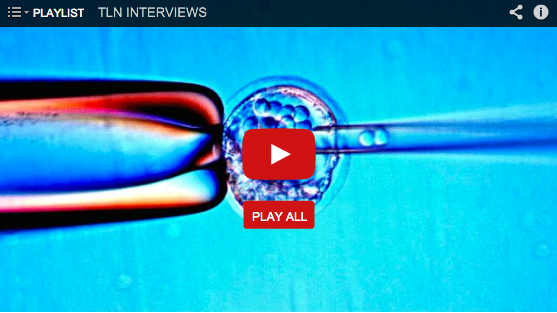
Stem Cells: A Breakdown, and Cord Blood Stem Cells Explained

The magical ability of the stem cell has been made popular by media and public controversy. But aside from being familiar with the debate about embryonic versus adult stem cells, few know the tangible facts about stem cells themselves. What makes stem cells so extraordinary, and how do cord blood stem cells fit into the healing puzzle?

All the organ cells in the body are represented by stem cells in some way, shape, and form. It is akin to nature

Girl with Cerebral Palsy will Leaves UK for Stem Cell Treatment

To provide their eight-year-old daughter a revolutionary new treatment, a Bournemouth couple is trying to raise

Cartilage Replacement Procedure Uses Body’s Own Stem Cells

Based on the body’s own self-healing processes and stem cells, a new alternative therapy for cartilage replacement has been developed by German researchers.

Currently, a culture has to be taken from healthy cartilage. Expanded cells are then re-injected into the area where cartilage has been lost or worn after the culture is expanded in the lab. This multi-step process is time consuming, but the only choice offered at the moment.

The cultivated cartilage cells grow on a sponge-like structure composed of animal collagens. Industrial-grade bovine collagen is used by the doctors for this purpose. The newly transplanted cells need the structure for support.

The practice, which is known as autologous chondrocyte transplanting (or ACT), is rather costly and requires numerous operations. It costs $4,700 to $9,500 (€3,500 to €7,000) just to have the cartilage cultured in a lab. The many factors associated with the procedure can make it prohibitive for many.

A much simpler and less-expensive alternative has now been developed. Based on activating the body’s own healing powers, north German researchers at Lübeck University are responsible for the novel technique.

Micro-fracturing, a method in which doctors drill tiny holes into open bone, is performed in the area where cartilage is worn out. Mesenchymal stem cells are released from bone marrow during the bleeding.

Cut to the shape and size of the lost cartilage, a sponge-like collagen frame is inserted into the location. Doctors then inject a small amount of blood serum from the patient which can coax the mesenchymal stem cells from the bleeding bone and help them turn into cartilage cells. The serum contains a growth factor to assist the process.

No externally grown cells are required as a cartilage-like tissue is developed by the patient’s own cells that join to the sponge.

“What’s funny about this matrix is that it creates a ceiling, and tissue or cells that grow underneath it, cling to it,” said Peter Behrens, who developed the procedure at Lübeck University Clinic. “In this covered area, new tissue grows.”

Clinics in Potsdam, Hanover, Freiburg, and Regensburg, are testing the new procedure which is known as autologous matrix induced chondrogenesis (AMIC).

“The stem cells are in our body,” Beherens said. “That’s what is fascinating about this method; we are activating our own cells.”

Throughout the whole human body, stem cells reside in nearly every nook and cranny. Using bone marrow stem cells to treat conditions such as leukemia, has been a known method for year. Now cartilage defects are also being treated and healed using the same cells.

“Something that needs to be replaced because it degrades over time, but is still good for a few years,” is what Behrens said about the repaired cartilage when comparing it to asphalt.

The procedure has been completed successfully on several hundred patients thus far.

“Our own cartilage is still the best, but this is a replacement that can help us be pain free for five years or so,” Behrens said. “That is the whole idea of these procedures.”

Since the procedure can be repeated every few years, Behrens says that he thinks the useful life of the repair is acceptable. And a prosthetic cartilage injection would be an option for the patients as well if they chose to go that route in the future.

Abnormal Corneal Cell Growth Cured with Bone Marrow Stem Cells?

The cornea, which is the translucent external layer of the eyeball, may be repairable thanks to a new breakthrough study. Researchers have revealed that the natural protein keratocan, which is involved in the development of the cornea, can be formed by bone marrow stem cells which can differentiate into the protein.

The outcome of the study could aid those with the inherited disease that is abnormal corneal cell growth.

Researchers Hongshan Liu and Winston Whei-Yang Kao at the University of Cincinnati led the study team.

The study was conducted using bone marrow cells and injecting them into the corneas of mice to see if they would be able to modify corneal abnormalities that had been induced by the researchers to imitate genetic eye mutations.

The abnormal corneas in the animal models began to transform their shape and heal due to the injected bone marrow stem cells. This occurred after only one week according to the researchers.

“We found that bone marrow stem cells can contribute to the formation of connective tissues. If we can change the function of non-corneal bone marrow stem cells by introducing them into human corneas, we can possibly repair the loss of visual sharpness caused by mutations,” Kao said.

A clinical trial is presently being planned. Future generations of those suffering from genetic corneal diseases could be helped if the trial is successful.

“When the donor cells disappear after a few years, the corneal disease often reoccurs. However, if we can place the stem cells inside the cornea, they will repair the lost function of the mutated gene, and stem cells can presumably renew themselves and maintain effective treatment longer, if not forever,” Kao said.

The research was presented in Ft. Lauderdale, Florida, at the annual Association for Research in Vision and Ophthalmology meeting.

Blind Man Sees Stem Cells as the Only Hope

With the anticipation of restoring his vision with the assistance of a stem cell treatment, a blind man has taken action and undergone the controversial procedure.

Despite the caution from a UK medical authority who called the procedure “implausible”, James decided to go to a new clinic in Germany due to his desperation. James has been unable to see anything for 23 years.

James had plans to journey to Holland for the

Heart Trial Holds Promise to Break New Ground

Some doctors are saying that medicine as we know it may be altered forever after observing the outcome of a stem cell clinical trial involving Austin patients.

The trial involves taking bone marrow adult stem cells donated from healthy adults and using them to treat heart attack patients.

Rebuilding the heart muscle of heart attack patients is the promise of the research according to doctors: a feat which has never been accomplished before. With just 10 sites nationally, the trial is in its first phase.

Ben is taking part in the adult stem cell clinical trial and is one of the 53 heart attack patients involved. As a math teacher, he was eager to take the calculated risk.

Cord Blood Banking Becoming the Popular Choice

As a soon to be young mother, Kimberly did not have to think when her obstetrician recommended that she consider banking the blood from her new born baby

Mysterious Donation Allows Man to Pay for Stem Cell Treatment

A man will now be able to add precious years to his life with his family thanks to an anonymous donation of

Insulin Production Unaffected by Adult Stem Cells

Researchers assumed that beta cells, which are insulin producing cells in the pancreas, would be produced by the differentiating adult stem cells that were introduced into the tissue.

Instead, the beat cells replenished their own numbers by slowly dividing.

“Ultimately, if diabetes researchers learn how to control insulin production, we can better treat patients who now can’t produce insulin–children and adults with type 1 diabetes,” said study leader Jake A. Kushner, M.D., a pediatric endocrinologist at The Children’s Hospital of Philadelphia. “This research tells us that we need to better understand what regulates the growth of beta cells, rather than searching for adult stem cells that give rise to beta cells.”

In the May issue of Developmental Cell, Dr. Kushner’s team reported their results which were based on animal studies.

The breakthrough could establish the basis for eventual therapies since it advances the fundamental understanding of insulin biology. An instant impact on diabetic treatment is not likely due to the study.

Life-saving medication or insulin injections are presently a necessity for patients with type 1 diabetes. Medical researchers hope to restore the body

Reserve Stem Cells Come to the Rescue

Our sense of smell is continually attacked by harsh chemicals that we unintentionally inhale, risking damage or death to our olfactory cells. Without these nerve cells, the only cells in the body to run directly to the brain with information of the outside world, we would lose our sense of smell.

But we may be able to repair the most severe damage to the nerves responsible for our sense of smell with the assistance of a backup supply of stem cell that were discovered by Johns Hopkins researchers. When adjacent cells die, the reserve cells move to correct the deficiency. But usually, they remain dormant. Next weeks online edition of Nature Neuroscience will repot on the new discovery.