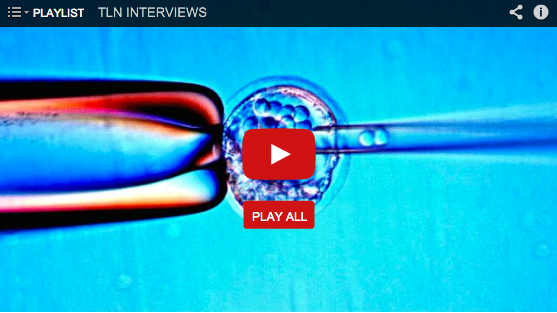
Mouse Skin Cells Engineered to be Identical to Embryonic Stem Cells

The equivalent of embryonic stem cells have been produced in mice with the use of skin cells. This advance in stem cell research does not entail the controversial destruction of embryos. The findings were reported Wednesday be three independent teams of scientists.

Without the controversial political and ethical debates surrounding the use of embryos, the method could show the way to breakthrough medical treatments if it can be duplicated in humans. However, that would be a considerable leap.

None the less, the achievement impressed many experts.

Paralyzed Rats Walk Again After Human Adult Stem Cell Treatment

Researchers from the University of California, San Diego (UCSD) School of Medicine are reporting that six weeks after receiving grafts of human spinal stem cells (hSSCs), paralyzed rats regained almost normal ambulatory function. The animals were paralyzed due to loss of blood flow. The study has been published in the June 29, 2007 edition of Neuroscience. UC San Diego professor of anesthesiology Dr. Martin Marsala, M.D. led the study.

“We demonstrated that when damage has occurred due to a loss of blood flow to the spine’s neural cells, by grafting human neural stem cells directly into the spinal cord we can achieve a progressive recovery of motor function,” said Marsala.

“This could some day prove to be an effective treatment for patients suffering from the same kind of ischemia-induced paralysis.”

Marsala hopes to be prepared to carry out human clinical trials by next year. The current focus is on using animal models to establish effectiveness and safety of the human stem cell therapy.

For those individuals who undergo aortic cross-clamping, 20 to 40 percent of patients experience spinal cord ischemia as a consequence of the surgical procedure. It is a serious complication and causes paraplegia. During the procedure to correct a potentially lethal aneurysm, blood flow from the heart must be temporarily blocked with a clamp as the surgeon works on the aorta. Even though the spinal cord remains intact, loss of muscle control or irreparable rigidity and spasticity of the lower limbs can occur due to the lack of blood flow that results in the death of spinal inhibitory neurons which are specialized spinal cord neurons. After only 30 minutes, the neurons become susceptible to death.

“The important difference between spinal cord ischemia and spinal cord trauma, such as might occur in a diving or car accident, is that in the ischemia model, no mechanical damage has occurred to the spinal cord,” said Marsala.

“The spinal cord and brain motor centers are still partially connected, but there has been a selective loss of inhibitory neurons in the spinal cord. Since these cells are necessary for coordinated motor activity, our research aims to replace these lost neurons by grafting new spinal stem cells, which repopulates the pool of degenerated neurons.”

Human spinal stem cells were injected into nine rats 21 days after spinal cord ischemia was induced. There were a total of 16 rats used in the study and the seven non-stem cell rats were injected with a placebo medium containing no stem cells. Every seven days the motor function was recorded and in the rats that received stem cells, a progressive recovery of ambulatory functions was observed.

In all lower extremity joints, three of the nine rats injected with hSSC’s improved their mobility, but most compelling was that another three actually returned to walking after six weeks. According to Marsala, in all nine rats, the majority of transplanted human spinal stem cells survived and became mature neurons. In the spinal area, all the animals had a constant presence of transplanted cells and compared to the control group the hSSC’s rats all achieved significantly better motor scores. Similar results were achieved during a second study which was conducted over three-months.

“Other human stem cell transplants in the spinal cord have focused on repairing the myelin-forming cells,” said co-author Karl Johe, a researcher at Neuralstem, the company that manufactures the hSSCs used in the study. “In this study, we succeeded at reconstructing the neural circuitry, which had not been done before.”

The researchers believe that the therapy may eventually be confirmed to be even more successful in human patients, who would be able to receive physical therapy once treated.

Saying that the goal is to offer a significant gain in functional mobility of the patient’s legs Johe added that, “physical therapy may accelerate integration of the grafted stem cells and enhance their therapeutic benefit.”

Marsala has a history working with human neuronal stem cells. A previous work also using rat models was published in the October 2004 issue of the European Journal of Neurosciences. 40 to 50 percent of the animals tested in that study had significant improvement in motor function. The progress was measured by recording improved muscle tone and the suppression of spastic movements. In the spinal cords of the rats that received transplanted neuronal cells, a post-mortem study showed an increase in the expression of inhibitory neurotransmitters and a robust maturation of neurons.

Spinal drug treatments using implanted pumps or continuous systemic drugs make up the current and somewhat effective standard treatment for debilitating muscle spasticity. These treatments are susceptible to eventual drug tolerance which lessens their efficacy, and are also accompanied by side effects.

“These research findings could offer great hope to people with spinal ischemic injury who suffer from resulting spasticity and rigidity,” said Marsala.

Umbilical Cord Blood Stem Cells and Their Importance

The placenta and umbilical cord contain blood that is jointly referred to as umbilical cord blood. Following the delivery of a baby, the blood is extracted right away. This blood is an extremely rich source of adult stem cells. Stem cells can begin replenishing or repairing old cells in the body by adjusting at anytime. And by having the capability to transform into new brain, blood, heart, and other types of cells; stem cells can bee viewed as the architects of the human body.

Information about birth defect, various diseases, and other ailments, can be discovered by scientists through stem cell research. The underlying secrets responsible for deformities and genetic diseases can be discovered with study. Stem cells have the power to create any cell the body needs by multiplying many times over until the body has repaired itself.

There are a vast number of conditions and diseases that are currently being treated using umbilical cord blood stem cells.

Extensive research is being conducted the benefits of cord blood stem cells in ailments like Brain tumor, Ovarian cancer, Small cell lung cancer, testicular cancer, Rheumatoid Arthritis, spinal injury, diabetes, Parkinson

Paralyzed Man Will Get Indian Stem Cell Treatment

Helping his significant other with the daily chores would be a dream come true for Andrew. This may seem odd, but running out for groceries, mowing the lawn, even a day spent cleaning the gutters would be ideal.

It was these activities, or work as most would put it, that Andrew took for granted a year and a half ago. Not surprisingly, most of us probably feel the same way. But then a motorcycle crash left the 41-year-old paralyzed, and unable to experience even the mundane things in life.

But a private Indian hospital has accepted him as a patient, and on June 20th he will receive stem cell treatment that will potentially restore his ability to walk.

When a driver changed lanes without checking, he swerved his motorcycle to avoid an accident, but lost control of his bike changing his life forever on October 1, 2005.

“I’ve gone down a big ditch on the shoulder of the round-about and I don’t remember this, but I ran through a tree and came back onto the road. All I remember is coming to and trying to get up and then it was like, ‘hang on, I can’t move my legs’.”

He was told that he would be paralyzed from the chest down after being flown to the Princess Alexandra Hospital in Brisbane. He had damaged his spinal cord between the T6 and T7 vertebrae.

At the hospital Andrew met an important woman. Following stem cell therapy, Sonya regained sensation in her legs and her control over her bowel and bladder as well. After being treated by Dr. Geeta Shroff at the Delhi Nu-Tech Medicare facility, she made international headlines due to her amazing progress.

Sonya’s life was similar to Andrew’s once. She was told that she would need to figure out a way to live with her disability, and Andrew knew her when she was in the same state. After stem cell therapy, when she was once again wiggling her toes, Andrew watched a news story about her on television. By this time, Andrew had already talked to her about her stem cell treatment after tracking her down while she was still in India.

“She told me about Dr. Shroff and her treatment and obviously she was over the moon,” he said.

“She had gone from being in a wheelchair for the rest of her life, to standing again. In two years she has been told she will be walking, unassisted. It may not be a normal gait, but who cares? It’s something.”

Andrew ended up booking his own procedure after doing extensive research on stem cell therapy and contacting Dr. Shroff himself.

He will start his first series of stem cell injections a day after he arrives in India with the rest of his young family. His household partner, Sarah-Jayne Matthews will fly with him as well on June 19th.

He will need to stay in India for 2-3 months to complete the entire course of treatment. They are admittedly a bit short on cash for the entire endeavor despite numerous fundraising efforts and the help of friends and family.

They want to be able to afford a camcorder to track Andrew’s progress. So they can keep in touch with friends and family, a 3G phone would also be nice. And the children need to continue their school work while overseas so purchasing a notebook computer is also in order.

Within the medical community, Dr. Shroff refuses to publish her results and this has drawn criticism from medical professionals. Andrew understands he is taking a risk, but he has seen all the proof he needs.

Andrew has seen and talked to patients who have gotten better, dramatically in some cases. So the fact that Shroff has been labeled as a quack by experts is irrelevant to Andrew, and misleading.

Any chance he has to regain the part of his life he lost is worth taking according to Andrew. He spent his life before the accident being active and will travel to India to potentially restore his body.

“I’ve never ever given up hope that I will walk again and I never will,” he said.

“From day one, I have researched all the different stem cell procedures around the world and this is my best chance. This is the best chance that is available to me.”

“There is a fear factor in everything you do. That’s normal. There could be repercussions from it, but I’m willing to accept that.”

“I don’t expect to go in there and suddenly be able to walk out. That’s aiming too high. But it’s a ‘what if’ situation. What if I didn’t go and what if I was one of the ones who did get out of their wheelchair?”

“For that, I’m willing to take the risk. Because I have nothing to lose and any improvement is 200% on what I have now.”

Public Confused About Adult and Embryonic Stem Cells

In a letter published on May 22nd, a man named Greg equated embryonic stem cell research and adult stem cell research. The difference could not be more apparent and thus a correction is in order.

Few news stories today present the two types accordingly and instead fail to distinguish the significant differences between the two. It is crucial to understand the difference and the media has perhaps contributed to the confusion today.

The most important distinction to make is that unlike embryonic stem cell treatment, adult stem cell treatment is effective. As a result of adult stem cell research, more than 70 existing medical treatments have been developed. Even one simple treatment has yet to be yielded as a result of embryonic stem cell research.

Contrary to the comments made in Greg’s letter, the statement “great future potential” can be tied exclusively to adult stem cell research, not embryonic.

The second important point to make note of is the ethical nature of adult stem cells. Without causing harm to anyone, the placenta at birth, umbilical cord blood, and other types of non-embryonic tissue, are all sources of adult stem cells. However, without destroying human embryos, embryonic stem cells cannot be obtained.

False Hope Comes with Embryonic Stem Cells

Lobbying for the passage of a bill authorizing federal funding for embryonic stem-cell research, Rekha and others who have been affected by Lou Gehrig’s Disease (ALS), were in Washington D.C. earlier this month. On May 18th, Rekha wrote a column titled, “ALS Activists Fight for Research, Cling To Hope”. The material was infuriating and heartbreaking at the same time; Rekha believes that embryonic stem cells “may hold the key to finding a cure.” However, she was mistaken.

For the treatment of injuries and diseases, only adult stem cell have been proven effective.

Even the American College of Pediatricians (ACP) called for an end to embryonic stem-cell research, “which prolongs needless suffering by delaying the development of more promising adult stem-cell treatments and cures.” On May 14th, this entire medical organization backed up the fact that embryonic stem cells are just not necessary.

Exclusive use of adult stem cells has resulted in the successful treatment of dozens of conditions and diseases over the last decade. The ACP cites these strong pro-adult stem cell results further noting, “catastrophic results…producing the wrong tissue, forming tumors and triggering immune rejection,” when describing the abysmal failure that embryonic stem cell trials have produced. Asserting that it, “steals resources away from the established utility and potential of adult stem-cell research”; the medical group denounced embryonic stem cell research as a tremendous waste of money and resources.

Afflicted patients and their families continue their journey on a path that leads to nowhere because of people like U.S. Senator Tom Harkin who is a sponsor of the embryonic stem cell bill.

Heartless and cruel are only a few of the words being used to describe opponents of embryonic stem-cell research. But offering false promises to millions of desperate people who are suffering from diseases and conditions that could be treated with adult stem cells right now may be even more heartless.

Muscle Building Stem Cells for Regenerative Therapy

Responsible for producing the almost bursting biceps of body builders and the wash board abs of fitness fanatics, a new report confirms the existence of some uncommitted stem cells residing amongst those of the muscle. For people that suffer from muscular dystrophies and an assortment of other muscle-wasting diseases, the discovery could show the way to new muscle-regenerating therapies. These would include stem cell-replenishing drugs and cell transplantation regimens. According to researchers, these treatments could also serve a dual purpose by also keeping people strong as they age.

A mix of cells already dedicated to their muscular destiny and other cells that behave more like versatile stem cells make up part of the so called satellite stem cells. The breakthrough was made by an Ottawa Health Research Institute team led by Michael Rudnicki. The cells had commonly been considered by scientists as a homogeneous population of devoted muscle progenitors. In the lab, the regenerative reservoir of cells that mice have was successfully replenished when Rudnicki’s team injected the “satellite stem cells” into the muscles of the mice.

“We’ve found that there are two types of satellite cell–90% that are already committed to becoming muscle and another 10% with characteristics normally attributed to stem cells,” Rudnicki said. “It’s not been shown yet, but these muscle stem cells might even have the capacity to make other tissues, such as bone and fat.”

“We’ve also shown that these satellite stem cells, when transplanted into muscle, can repopulate the regenerative cell niche. This is a very significant advance in our understanding of satellite cell biology that will require us to rethink decades of research. It also opens new avenues for therapeutic treatment of muscular diseases.”

Each of which includes hundreds of nuclei, skeletal muscle fibers are essentially long tubular cells. Satellite cells are found in between the coating of glycoproteins and collagen that surrounds the muscle fiber. Responsible for the repair, growth, and maintenance of skeletal muscle after birth, the existence of satellite cells were first revealed in the 1960’s. When the stress of trauma or weight-bearing presents itself, the cells which are by and large quiet, jump into action.

Still, Rudnicki said that uncertainty still exists in regards to the mechanisms that control the development and identity of the satellite cells. Muscle cells that had changed back into a more primitive state by reverting or dedifferentiating was once thought to be the path that satellite cells followed from their original muscle cell state. This was suggested by earlier studies.

Isolated from mouse muscle, the molecular profiles of the satellite cells was closely observed by researchers in the new study.

Defined by the inactivity or activity of a gene called Myf-5, the satellite cells consist of two classes.

A significant difference in the satellite cells’ behavior was made clear by the genetic difference. A characteristic commonly seen among stem cells, asymmetric division, was observed in the satellite cells without active Myf-5. Exhibiting another Myf-5 positive cell and stem cell-like capacity for self renewal, the lopsided cell division produced one “daughter” like its parent.

The satellite cells continued on the path to becoming muscle tissue when they were injected into the muscles of mice with the Myf-5 switched on.

In contrast, transplantation of Myf-5 negative cells “extensively contributed to the satellite cell reservoir throughout the injected muscle.”

Diseased muscle can be directly transplanted with satellite stem cells. Researchers made this conclusion while noting that the identification of markers enabling their prospective isolation from human muscle tissue could be found in the molecular characterization of satellite stem cells.

“Alternatively,” they added, “understanding the molecular regulation of satellite stem cell symmetric versus asymmetric cell division will lead to identification of biologics or small drugs that specifically target the relevant pathway leading to satellite stem cell expansion.”

U.S. Citizens Denied at Home Leave Country for Stem Cell Treatment

Two years ago, Tori suffered brain injury when she was caught up in a car accident. She was left powerless to talk or walk, and her family decided to do anything they could to help her be who she once was. The opted for a trip to China for adult stem cell therapy. It is now three months after her treatment, and 16-year-old Tori can take a cookie out of her father’s hand. A task that would have only been a dream prior to the stem cell treatment.

Tori’s family is not alone with their frustration and impatience towards U.S. scientists. The number of American’s the feel the U.S. is too sluggish in determining whether stem cells are safe and effective is growing, and to get treatment, more are leaving the country as an alternative. Tori’s family chose China because of the limited options in the United States.

Tori’s treatment consisted of acupuncture, aggressive physical therapy, and 50 million adult stem cells which were spread over a course of five injection. The family paid $20,000 in advance for the therapy.

Tori’s father Tim says that it could take up to eight months to see progress. Her last injection was on February 12th. But already her chewing, eating, and swallowing have substantially improved.

The family hopes for even more improvement in Tori, who can now vocalize more and can finish of an entire apple.

Tori was trapped underwater for about 20 minutes when a car she was a passenger in rolled over and ended up in a canal. It was June 2005, and 14 year old Tori had dreams of becoming a Stanford educated doctor. She enjoyed snowboarding and dancing.

Tori’s story has helped other families to make the decision to travel overseas. The website PrayForTori.com prompted at least eight other families to make the decision. On Utah girl who suffered brain injury due to a car accident is currently at the same hospital in China with her family at this very moment.

Tori’s family plans to do another round of stem cells therapy next year.

“It is the thing that will help (Tori) the most eventually, I’m convinced of that,” said Tim, who urges increased funding for research.

“In the end, it’s just going to help so many people. I don’t see how we can not do it.”

Adult Stem Cells Engineered to Produce Insulin

Friday, U.S. and British researchers reported that diabetes could be treated by using stem cells taken from the umbilical cords of newborns. The cells could be engineered to produce insulin.

Insulin-producing cells in the pancreas are damaged by diabetes. Researchers were able to take stem cells, expand them into a large number, and direct them to be similar to the insulin producing cells. The cells could potentially be used to fill the void left in the pancreas due to the damage that is caused by diabetes.

3-Year-Old Fights Leukemia with Umbilical Cord Stem Cells

A stem cell transplant was the final option that a three-year old girl had to save her life. She is now secluded in an isolation unit of the same hospital she received stem cell treatment in.

A worldwide donor search was initiated when Eva was diagnosed with leukemia 5 months ago.

A compatible match was found in the United States, and bone marrow was created using the stem cells from the donor baby