Medistem Announces Discovery: Menstrual Blood Yields Novel Stem Cell Population

A paper describing a novel stem cell population derived from menstrual blood has been published by Medistem Laboratories, Inc. (OTC BB:MDSM.OBNews) (Frankfurt:S2U.FNews) in collaboration with the Bio-Communications Research Institute in Wichita, Kansas, the University of Alberta, and the University of Western Ontario. The Journal of Translational Medicine has published the paper which is titled, “Endometrial Regenerative Cells: A Novel Stem Cell Population”. The publication is free to read at www.translational-medicine.com/content/5/1/57

“I view the discovery of the Endometrial Regenerative Cell (ERC) as a great step forward in providing an ethical, easily accessible, and potentially highly useful adult stem cell for treatment of numerous degenerative conditions,” said Dr. Xiaolong Meng, head of the research team. He continued, “ERC cells can be converted into basically all the major tissues of the body, including the liver, lung, pancreas, brain, heart, blood vessel, and muscle. Additionally, these cells produce 100,000 times the number of growth factors found in cord blood, opening the door to numerous regenerative applications.”

The study has exhibited that menstrual blood stem cells possess special cellular and molecular characteristics. This is the first publication in a peer-reviewed medical journal demonstrating these facts.

“The ability to take a cell and differentiate it into the tissue type needed by the body creates a world of opportunity in the world of organ and tissue regeneration,” said Neil Riordan, PhD, President and CEO of Medistem. He added, “With IP filed around the cell line, we have begun taking the next steps in the commercialization process. Currently, our collaborators at Western Ontario, Alberta, and the Bio-Communications Research Institute are doing a series of pre-clinical studies to establish efficacy data in a variety of indications. The indications currently being assessed include diabetes, liver cirrhosis, lung fibrosis, organ rejection, and multiple sclerosis. Should the data gathered prove strong in one or all the indications the next step will be to file INDs with the FDA and move into clinical trials,” said Riordan.

About Medistem Laboratories, Inc.
Medistem Laboratories is a biotechnology company that discovers, develops, and commercializes adult stem cell products that address serious medical conditions. Medistem’s primary focus is drug discovery and development, however, Medistem also outlicenses proprietary technology from their growing intellectual property portfolio to commercial entities in markets where stem cell administration is permissible. Medistem believes it is well positioned to be a leading developer of adult stem cell products given its licensee relationships and collaborative efforts with respected institutions.

Cautionary Statement

This document does not constitute an offer to sell or a solicitation of an offer to buy any of our securities. This document contains certain forward-looking statements within the meaning of Section 27A of the Securities Act of 1933, as amended, and Section 21E of the Securities Exchange Act of 1934, as amended. These forward-looking statements may include projections of matters that affect revenue, the ability to develop or license certain technologies; operating expenses or net earnings; projections of capital expenditures; projections of growth; hiring plans; plans for future operations; financing needs or plans; plans relating to the company’s products and services; and assumptions relating to the foregoing.

Forward-looking statements are inherently subject to risks and uncertainties, some of which cannot be predicted or quantified. Future events and actual results could differ materially from those set forth in, contemplated by, or underlying the forward-looking information.

Some of the important factors that could cause the company’s actual results to differ materially from those projected in forward-looking statements made by the company include, but are not limited to, the following: technology development limitations, intense competition, risk of business interruption, management of rapid growth, need for additional financing, regulatory approvals and requirements, dependence on key personnel and research, management and other administrative costs.

These factors are discussed in greater detail in the company’s quarterly and annual periodic reports, all as filed with the Securities and Exchange Commission.

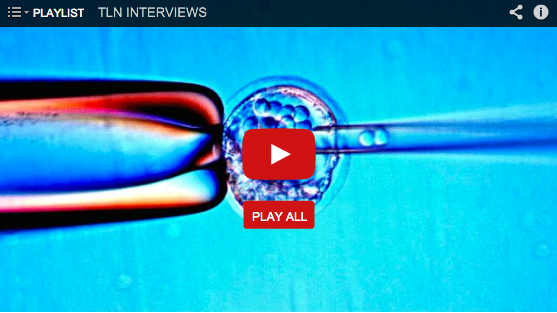
Stem Cells Discovered in Menstrual Blood

A research team from Wichita, Kansas has made a novel discovery involving adult stem cells that have been derived from menstrual blood.

To prepare itself to take care of a fertilized egg, the uterine lining is rebuilt each month after it has been shed to provide a new medium for egg development. The process is impressive, with a new 5 millimeter thick lining developed in only 7 days. This is accomplished by literally, growing billions of cells.

Adult stem cells are found in abundance in the endometrium, or uterine lining. But despite the rich source, actually harvesting the cells is a similar process as is involved with other sources such as bone marrow: the process is invasive.

The research team in Kansas has discovered that menstrual blood contains these endometrial stem cells as well.

The cells show characteristic cell surfaces of stem cells, given the right environment, can differentiate into at least 9 different cell types, and can create copies of themselves without differentiating. These are all qualities that can be associated with existing stem cells as well.

Menstrual blood was taken form two women for the teams research purposes. Xiaolong Meng and his team conducted the study at a private research institute in Wichita, Kansas, called the Bio-Communications Research Institute. The team collaborated with Medistem Laboratories, Inc. (OTC BB:MDSM.OB – News) (Frankfurt:S2U.F – News in making the discovery. Their paper which is titled, “Endometrial Regenerative Cells: A Novel Stem Cell Population”, has been published in the Journal of Translational Medicine. The paper can be viewed at www.translational-medicine.com/content/5/1/57

Medistem Laboratories, Inc. own the intellectual property rights to the discovery.

The menstrual blood derived cells doubled every 19.4 hours, marking a proliferation rate higher than the mesenchymal stem cells which are derived from cord blood. The researchers say that a few embryonic stem cell markers were observed in addition to the adult stem cell markers that were exhibited by the cells. One particular embryonic stem cell marker called Oct-4, which is considered a “master” marker, was observed.

Muscle, bone, fat, and nerve cells were among the nine different cell types that were created using the menstrual blood derived cells.

Menstrual Blood Stem Cells Studied in Novel Discovery

Researchers are saying that many types of human cells could be developed by a new type of stem cell that can be found in the blood that is shed during women’s menstrual cycles.

During the endometrial phase of the monthly menstrual cycle, a new uterine lining grows after the old one has been shed. Stem cells have been suspected to be one of the biological mechanisms that help the cells of the endometrium, or uterine lining, to regrow at such a fast rate.

Recent discoveries have proven that adult stem cells are found in large quantities within the uterine lining. However, harvesting those cells has been another issue.

Menstrual blood has provided an answer for this dilemma. Endometrial cells are found in the menstrual blood according to a study that was recently published in the Journal of Translational Medicine.

The study was conducted using menstrual blood taken from two women, at the private research institute, the Bio-Communications Research Institute, in Wichita, Kansas. Xiaolong Meng led a team that studied the cells. The collaborated with Medistem Laboratories, Inc. (OTC BB:MDSM.OBNews) (Frankfurt:S2U.FNews), who own the intellectual property rights for the discovery.

With a behavior analogous to that of stem cells, the team found the following similarities:

The team says they found cells that behaved very much like stem cells:

— They showed characteristic cell surfaces of stem cells.

— Given the right environment, the cells were able to differentiate into many different cell types.

— They easily copied themselves.

In contrast to mesenchymal cells, which are found in umbilical cord blood, the menstrual cells reproduced more rapidly. They doubled about every 19.4 hours.

Lung, heart, and liver cells, were only 3 of at least 9 different cell types that were developed from the menstrual blood cells by the research team.

Many possible uses could be in store for the cells type once cultured at a large scale. The researchers are calling the cells endometrial regenerative cells.

“We have many problems with our current methods of stem cell therapy, like those taken from bone marrow. They may be rejected by the recipient and/or have limited potential to generate new tissue,” said Meng.

“Now we’ve found a possible new way to overcome these difficulties by using cells from menstrual blood.”

Umbilical Cord Transplantation Effective Treatment

Following umbilical cord blood transplantation after a reduced intensity treatment regimen, adults with hematological diseases have a three year survival rate of almost 50% according to researchers from the University of Minnesota. The journal Blood1 has published the details of the study in their October 15th, 2007, issue.

For adult and pediatric patients with hematologic diseases who do not have a suitable related or unrelated stem cell donor, umbilical cord blood transplants have become and integral part of the management. In patients with hematological malignancies, treatment outcomes from unrelated and related donors are comparable to those patients receiving umbilical cord blood transplants according to increasing research evidence. Since many patients with malignancy worsen or die before an unrelated donor is found, a major and decided advantage of cord blood transplantation is that stem cells are available without delay.

Because of the increased nucleated cell dose, when two separate cord blood collections are infused together, adult patients have better outcome according to scientists at the University of Minnesota. On the basis of being a partial rather than a full HLA match, one of the two cord blood collections is selected. Ultimately, graft versus graft reaction would reject stem cells from the mismatched umbilical cord blood collection, but the theory is that they will contribute to initial engraftment none the less.

110 patients with high-risk or advanced hematological disease were enrolled in the study. Eligibility requirements for the study included a minimum age of 45, or significant co-morbidities that precluded the administration of a myeloablative transplant regimen. The regimen used included a single low-dose of total body irradiation, cyclophosphamide, and fludarabine. Mycophenolate mofetil and cyclosporine was used for post-transplant immunosuppression. In order to achieve the protocol prescribed dose of nucleated cells, the majority of patients (85%) required two cord bloods.

Aplastic anemia, non-Hodgkin’s lymphoma, acute and chronic leukemias, myelodysplastic syndrome, Hodgkin

Reconstructing the Spinal Cord with Stem Cells

Critical information has been unveiled that could lead to novel therapies for repairing previously irreversible nerve damage in the injured spinal cord. Key elements in the in the body’s reaction to spinal cord injury have been discovered in this seminal study which has been published in this week’s Proceedings of the National Academy of Science.

Why the adult nervous system is unable to repair itself following spinal injury is still unknown. This is unlike a skin wound for example, where the repair process is well documented.

Even following severe injuries, repair and regeneration is common place in non-mammals and the developing brain. The role of stem cells and their potential to develop into different cell types has been suspected to play a major role in the rejuvenation of these cases.

“Because of their regenerative role, it is crucial to understand the movements of stem cells following brain or spinal cord injury,” says Dr. Philip Horner, co-lead investigator and neuroscientist at the University of Washington. “We know that stem cells are present within the spinal cord, but it was not known why they could not function to repair the damage. Surprisingly, we discovered that they actually migrate away from the lesion and the question became why – what signal is telling the stem cells to move.”

The migratory pattern of stem cells following injury is controlled by a key molecule called netrin-1. This was discovered after scientists tested numerous proteins. Guiding nerve cells to their proper targets, netrin-1 acts as a repulsive or attractive signal in the developing nervous system. Preventing stem cells from replenishing nerve cells, scientists found that netrin-1 specifically repels stem cells away from the injury site in the adult spinal cord.

“When we block netrin-1 function, the adult stem cells remain at the injury site,” says Dr. Tim Kennedy, co-lead investigator and neuroscientist at the Montreal Neurological Institute of McGill University. “This is a critical first step towards understanding the molecular events needed to repair the injured spinal cord and provides us with new targets for potential therapies.”

The National Institutes of Health and the Craig H. Nielsen Foundation funded the study.

Microcapsules Developed to Direct Neural Stem Cells

In order to treat a variety of genetic disorders of the central nervous system, including Hunter syndrome, biomedical engineering professor Stefan Zappe and his research team are developing a neural stem cell therapy.

Stem cells can differentiate into a diverse range of cell types. These primal cells can multiply through cell division, and retain the ability to renew themselves.

Zappe said,

Stem Cells Used for Mental and Neurological Disease Therapy

Passing clinical trials with no safety issues, stem cell technologies have been developed by scientists in Saint Petersberg.

The studies involved mental and neurological diseases and produced interesting results. Mental deficiency and idiocy were proved to be reversible when mentally challenged patients were transplanted with mesenchymal stem cells. Visible improvements in self-service skills, common behavior, speech and perception were observed in 8 patients who were enrolled in the trial therapy. Sensible games and learning ability were demonstrated by patients, while they actually lost inadequate reactions.

Stable positive effect of cell therapy was observed in about 85 per cent of medical cases in neurological patients with brain injuries and cerebrovascular accidents. Drug therapy became much more efficient and neurological deficit decreased significantly.

Safety of the adult stem cell treatment was proven.

New Bones Formed by Stem Cells

A breakthrough in human bone treatment has been made by the National University of Singapore (NUS) and the Malaysian stem cell firm StemLife Bhd. By using natural bone substances in combination with stem cells, a team of scientists has developed a new technique to produce bones. By combining stem cells with collagen and hydroxyapatite, NUS and StemLife scientists announced that they were able to produce a new substance that acts like bone.

Hydroxyapatite is an inorganic mineral that make up the bone. Giving structural strength to bone, blood vessels, heart, skin, cartilage, and eye; collagen is a protein in human tissues. Found in all multi-cellular organisms that retain the ability to renew themselves, stem cells are considered to be primal cells.

New bone tissue is generated when the invented biomaterial mineralizes bone-forming stem cells or osteoblasts said Professor Seeram Ramakrishna, the NUS’ dean of engineering, in an interview on nanotechnology website Azonano.com.

In order to treat defective bone and muscle, as well as heal wounds, the technique will enable orthopedic doctors to create bone linings and bone fillers according to StemLife.

Orthopedic science could be revolutionized in the future due to this breakthrough said Professor Aw Tar Choon who is the chief medical officer of StemLife. The bone grafting industry, which is currently operating at over $1-billion dollars, will also be open to the firm now.

International scientific journals published the findings of the Singapore and Malaysian scientists. At a cost of $90,046, it took StemLife two years to conduct the research on developing new bone.

Brain Stem Cells Can Now be Tracked

U.S. researchers report that brain stem cells can now be tracked for the first time with the identification of a new marker.

The team’s senior author said that for the conditions of and involving multiple sclerosis, early childhood development, and depression, the accomplishment is opening doors to new research.

“This is a way to detect these cells in the brain, so that you can track them in certain conditions where we suspect that these cells play a certain role,” explained Dr. Mirjana Maletic-Savatic, an assistant professor of neurology at the State University of New York, Stony Brook.

“This is also very applicable for situations where people envision the transplantation of stem cells into the brain,” the researcher said.

The breakthrough “is very important, because it now allows us to look and see ways in which to measure changes in endogenous [natural] neural stem cells,” agreed Paul Sanberg, director of the Center for Excellence for Aging and Brain Repair at the University of South Florida, in Tampa. He was not involved in the research.

The study was published in the November 9th issue of Science, and was funded by the U.S. National Institutes of Health.

The human brain and/or nervous system sustains critical damage in individuals who suffer from Parkinson’s, stroke, multiple sclerosis, traumatic injury, Alzheimer’s, and other conditions. Scientists believe they might be manipulated to repair or replace lost cells and tissues because stem cells have the potential to develop into other types of cells.

Stem cells called progenitor cells are already produced by key parts of the brain.

“There are two major areas where you can find them in the brain — one is the center for learning and memory, called the hippocampus, and the other is around the brains’ ventricles,” Maletic-Savatic explained.

So they can develop into new or replacement cells, these brain cells, like other adult stem cells in the body, are held in reserve.

Since humans keep collection memories, the stem cells found in the hippocampus are particularly useful. In order to interpret and store memories, the brain needs new cells.

“Memories always change,” Sanberg pointed out.

Since scientists haven’t had any means of tracking neural stem cells, research in this area has been slow. Because scientists discovered molecular markers that reliably identify them on MRS, two dominant cell types — glial cells and neurons — have been tracked for some time using a non invasive technology called magnetic resonance spectroscopy (MRS).

Now, brain stem cells can be marked for the first time.

A chemical signature that distinctly characterizes neural stem cells has been discovered by Maletic-Savatic’s team. The discovery was made using computer and state-of-the-art scanning technology.

“We think that it’s a complex lipid or lipoprotein,” the Stony Brook researcher said. Further investigation is under way to define and describe the molecule’s identity, she added.

The researchers tracked the quantity and location of neural progenitor cells in the brain using MRS imaging on mice, rats, and human volunteers who were healthy. They also used MRS to verify the transplant location after implanting some of these cells into an adult rat’s brain.

The concentration of neural progenitor cells in the brains of adult humans, adolescents, and young children was compared by Maletic-Savatic’s team. This marked another first. Their findings revealed that the number of these cells in the brain decreases markedly with age. This confirmed suspicions that arose during animal studies.

“We were actually really surprised that there was such a dramatic decline,” Maletic-Savatic said.

The researcher said she’s already planning to use the new tracking technology in a variety of neurological studies.

For example, it is suspected that antidepressants work by boosting the creation of new brain cells. With that in mind, Maletic-Savatic’s team will use MRS to “clarify whether abnormalities in these progenitors have any role in causing depression,” she said.

Maletic-Savatic said she is also planning a study looking at the cells’ role in early brain development because she is primarily a pediatric neurologist.

“Particularly in premature babies who can develop cerebral palsy and mental retardation,” she added.

MRS-guided research into neural stem cells may also benefit multiple sclerosis patients.

“We are now doing a study that already started a year ago on patients with MS, and we plan to prospectively follow them and see whether we can use this bio-marker as a prognostic tool,” Maletic-Savatic said.

She added that this type of stem cell research could also benefit research on a wide range of brain disorders. Maletic-Savatic said breakthroughs in that area are probably years away, but that tracking stem cells in the brain has obvious implications for research into stem cell transplantation.

“On the other hand, if we find drugs or ways that can stimulate your own endogenous cells, that would be even better,” she said.

Sanberg agreed that brain research would enjoy a marked boost with scientists being able to track neural stem cells.

“To be able to show that you are increasing neurogenesis in the brain through your treatment — through drugs that induce neurogenesis — that’s going to be very important,” he said. “This is a really strong first step.”

Heart Repair Boosted by Stem Cell Injections

In an effort that has generated more debate than breakthroughs, researchers at the University of California, San Diego Medical Center reported small successes Wednesday in using stem cells to patch ailing hearts.

Embryonic stem cell are considered to be capable of differentiating into any tissue in the body, but are controversial due to the fact a human embryo must be destroyed to obtain them.