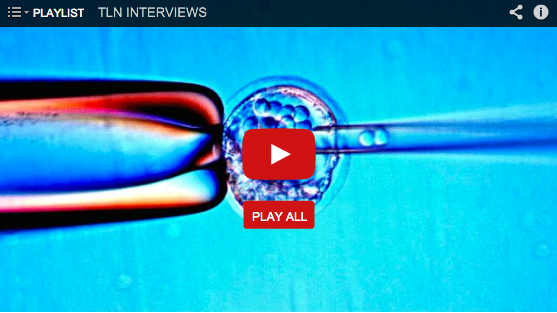
Some 25,000 Malaysians have registered to have their stem cells stored 5 years after it was introduced to the country.
November 24, 2007 by
Stem Cell Breakthrough Catalyst to New Medical Era
The ecstatic reaction of researchers, who are normally a less animated bunch, may be a good indicator of the importance and impact of a recent independently verified discovery: that common skin cells may be used instead of embryonic stem cells for research.
“This is a tremendous scientific milestone, the biological equivalent to the Wright Brothers first airplane,” said Robert Lanza, chief scientific officer of Advanced Cell Technology in Massachusetts., a statement echoing the view of many of his colleagues.
Federal funding has been restricted amidst political and social controversy over embryonic stem cell research and the ethical implications that the science entails. Today, the issue is more mainstream than it has ever been, so a solid understanding of biology is not necessary to understand the enthusiasm surrounding the research. Without the use of a woman’s eggs or human embryos, embryonic stem cells have been created by converting normal human skin cells using a simple technique developed by researchers in Wisconsin and Japan.
A limitless supple of research material will more than likely be created, and ethical issues will be completely eliminated, as the experiments are repeated and the methods perfected in giving embryonic power to skin cells.
Embryonic stem cells are considered to have the potential to develop into every type of human cell. Developing treatments for a long list of diseases and injuries which affect virtually every organ is the focus of scientists using embryonic stem cells for research. But ethical concerns, and more importantly, scientific/technical roadblocks have plagued the science, which has yet to produce even one successful treatment.
Stem cell research as a whole should be accelerated thanks to the new discovery. Many researchers who once had their hands tied because of limited cell lines, limited funding, and ethical concerns, will have now have an entire new frontier open in front of them. A much broader scope of expertise will be brought to the laboratory, which will lead to a much wider array of funding.
The discovery could be the catalyst for a new era in medicine, and Mr. Lanza’s Wright Brothers analogy may be spot on. It took 42 years for humans to walk on the moon after Lindbergh flew across the Atlantic Ocean 24 years after the Wright brothers’ maiden flight. But society should not be accustomed to this rate of innovation. Medicine and technology, with today’s global reach, could set a new precedent for the pace of discovery.
November 23, 2007 by
Stem Cell Treatment for MS and Arthritis Enhanced by New Approach
Scientists have discovered a way to alter the immune system and in the process, given new hope to the thousands of individuals who suffer from multiple sclerosis and arthritis.
A faulty immune system that attacks the body is responsible for the condition. The condition can be effectively cured by replacing the existing immune system with a healthy one. This is accomplished by taking stem cells from a healthy donor, and transplanting them via injection into the patients body.
Before providing new cells from bone marrow, umbilical cord blood, or another suitable source, the existing immune system was traditionally destroyed using an aggressive form of radiotherapy. This was the only way doctors could proceed: until now.
In the new method, the healthy immune system is still established after the unhealthy immune system is destroyed, but a toxin is used to clear out the old system instead of radiotherapy. The stem cells are injected after the initial purging is complete.
The benefits are potentially enormous for humans and could be used to treat MS and rheumatoid arthritis according to scientists at Stanford University School of Medicine in California. However, the procedure has only been utilized on mice thus far.
In the UK, one out of every 5 individuals is afflicted with arthritis. And Multiple Sclerosis affects about 85,000 people as well.
The journal Science reported the research results of Agnieszka Czechowicz, Dr. Deepta Bhattacharya, and Professor Weissman. Stem cells attached to bone marrow, and a new blood and immune system was established when the 3-person team transplanted new, blood-forming stem cells into mice.
So with this method, the new immune system will no longer attack the nerves of the body, when stem cells are taken from a donor and implanted into a person with a good tissue match who has an auto-immune disease such as multiple sclerosis.
In order for the technique to work on humans, researchers must first work out the kinks with more animal testing.
Dr. Laura Bell, the research communications officer at the MS Society, said: “Stem-cell studies are an important avenue of research that hold promise in terms of treatments for MS. This early-stage study is interesting and we look forward to seeing how the work translates into studies in people with MS.”
Professor Edward Tuddenham, of the Royal Free Hospital, London, said: “For those whose blood stem cells contain a severe genetic defect such as that causing sickle cell anaemia, replacing them with normal stem cells would enable restoration of normal blood.”
“Bone marrow transplantation has been used for sickle cell anaemia with good results in children, but in adults it is difficult to get the new stem cells to take in the face of rejection by the resident stem cells and their progeny – the immune system.”
Professor Lars Fugger, of the Medical Research Council Human Immunology Unit, Oxford University, said: “This study has great potential.”
November 22, 2007 by
Systematic Approach to Stem Cell Treatment for Brain Damage Being Developed
Caring for babies suffering from cerebral palsy or those who suffer a stroke may soon follow a protocol similar to what Dr. Tadashi Masuda and Dr. Mina Maki are performing today. They are preparing for a transplant, the first step: placing two syringes inside an ice packed plastic foam box.
Protocols that could be followed in any clinic in the country are being developed by Cesar Borlongan and his team inside the laboratory at the Augusta Department of Veterans Affairs Medical Centers. While establishing a systematic method, they hope to also prove that adult bone marrow-derived stem cells are effective in helping repair the brain damage.
This particular stem cell therapy is being studied in animal models by Dr. Borlongan, also an associate professor at the Medical College of Georgia, and Dr. David Hess, MCG chairman of neurology. The research is being facilitated by a $4.2 million dollar grant which will span five years. The same therapy will be studied for use in babies who, due to lack of blood or lack of oxygen around the time of birth, suffer brain damage. 10 percent of the cases of cerebral palsy can be attributed to this this circumstance. This second study will funded by an additional $1.8 million dollar grant spanning three years, and the research will be carried out with James Carroll, chief of pediatric neurology at MCG.
The research on cerebral palsy may be approved for human trials sooner since the procedure has already been proven to be relatively safe and there is a lack of existing therapies for the condition as well.
“I would hope we would get a start on this in a year,” Dr. Carroll said.
The researchers were looking for methods that could be duplicated easily, such as shipping the cells in a liquid nitrogen container to thawing them and loading them into syringes for injection into an IV. Just as if they were trying to get the FDA to approve a new drug, the approach for the stroke model has been standardized said Dr. Borlongan.
“This is the same way we’re going to do it in the clinic,” he said. “Once the cells arrive in the clinic, all the clinicians will do is thaw the cells and then inject them into the patient.”
Dr. Borlongan said that they now believe the benefit to stroke victims might be from growth factors secreted by the cells as opposed to the former theory that the benefit was derived from the replacement of damaged cells.
“Once they release these beneficial substances, they help rescue the dying cells from the host tissue,” he said. “And they also increase the production of new cells.”
Dr. Carroll said that neonatal patients could also benefit from the treatment.
“We think it may have some additive effect in terms of new brain cells, but the main effect has to do with assisting with brain repair,” he said.
Many stroke patients arrive at the hospital too late to meet the deadline of a three-hour window in which a clot-busting drug must be given. The possibility of creating a treatment that could provide benefits past this point of no return has sparked the interest of many. Even days after stroke, observations from animal models showed that the treatment made a difference according to MCG researchers.
“What we have seen with the stem cells, even after seven days post-stroke, you can get functional benefit,” Dr. Borlongan said. “But because most stroke patients are discharged after a few days, they chose a two-day time frame to deliver the stem cells. And because these are adults cells, and not the embryonic stem cells that have generated much controversy, they can sidestep some of those ethical concerns,” Dr. Borlongan said.
Dr. Borlongan said that prior to using human cells, rodent cells will be the focus in order to prove safety and effectiveness. Human trials could follow in the fifth year, when the team plans to apply to the Food and Drug Administration.
“Hopefully, after the five-year project, we’ll have something to give to the patient,” he said.
November 21, 2007 by
Political Debate Over Embryonic Stem Cell Research May Soon End
Democrats have been spending ample time planning for next years elections. Specifically, on the topic of embryonic stem cell research. But a breakthrough by Japanese and American research teams could give President Bush and those who mirror his sentiments more than enough support to end the debate.
Progress in embryonic stem cell research was potentially blocked earlier this year when President Bush vetoed two separate bills which were in favor of allocating taxpayer dollars for the science.
The destruction of human embryos was not necessary in order for medical advances to be made in the field of stem cell science advocated Bush.
He may have been on the right track with his statements. On Tuesday, two separate research teams from Kyoto University in Kyoto, Japan, and the University of Wisconsin-Madison, reported stem cell advances that could end the controversy over embryo use forever.
The journals Cell and Science published papers by both teams on Tuesday regarding the breakthrough. Science published the work of Junying Yu, who was working in the lab of stem-cell pioneer James Thomson of the University of Wisconsin-Madison. Cell published a paper by the team led by Dr. Shinya Yamanaka of Kyoto University.
Both teams were able to take regular human cells, in this case skin cells, and use a technique called “direct reprogramming” to alter the cells to have the same potential as embryonic stem cells. All this without destroying, or even touching, a single human embryo.
White House officials are calling the debate over.
“This is evidence … that we can get the good results we want from science without cutting corners on ethics,” said Karl Zinsmeister, Bush’s domestic policy adviser. “Let’s not set up a false choice between on the one hand, progress, and on the other hand, ethics.”
The greatest potential in stem cell research is believed to be synonymous with embryonic stem cells. This is a conviction that many individuals adhere to, despite the existence of evidence pointing to some forms of adult stem cells having similar potential. However, the debate begins and ends with the human embryo, which is destroyed in the cell harvesting process. Bush and his allies do not want to force taxpayers into what may be an ethical dilemma for many. Supporters of embryonic research say that the embryos, left unused, would be discarded regardless, and that public money would only be directed towards these specific embryos.
Some defenders of embryonic research say that all types of this science should be federally funded, and that the breakthrough changes nothing about the debate.
“The argument that we need to have all types of ethical research is the argument that sways voters,” DeGette said Tuesday. “The White House and the opponents of stem cell research have been saying for years that they think adult stem cells are substitutes. This is not a new argument that they’re making.”
“Scientists may yet find that embryonic stem cells are more powerful,” said Sen. Tom Harkin, D-Iowa.
“We need to continue to pursue all alternatives as we search for treatments for diabetes, Parkinson’s and spinal cord injuries.”
But these comments seem indefensible thanks to the new technique. If skin cells, or any adult cell for that matter can be easily modified to have the exact same potential as an embryonic stem cell, than the debate is truly over. What researchers are left with is essentially, an embryonic stem cell, without the destruction of an embryo.
Scientists who have long supported embryonic science and cloning are beginning to switch sides. Even the most notable have applauded the breakthrough.
Scottish researcher Ian Wilmut, famous for his role in cloning Dolly the sheep a decade ago, has given up his embryonic cloning approach to produce stem cells and switched to direct reprogramming instead.
The Japanese method has more potential than embryonic stem cell research; Professor Wilmut said his own research team held a meeting at which this point was agreed on.
He said: “The work which was described from Japan of using a technique to change cells from a patient directly into stem cells without making an embryo has got so much more potential.”
If those who know more about stem cell science than the politicians agree that using the new technique offers more potential than embryonic stem cells, than the an end to embryonic stem cell research may be on the horizon.
“It solves the ethical dilemma,” said Sen. Tom Coburn, R-Okla. “This should put an end to” the debate.
“Maybe we can all now reach agreement on what has been an all-too-divisive issue and advance this promising research through the power of federal funds,” said Senate Minority Leader Mitch McConnell, R-Ky.
Despite any results, the debate should still make an appearance on the campaign trail in 2008.
“It’s terribly wrong for any politician to be trying to pick and choose one type of ethical research over another,” DeGette said. “That issue isn’t going away.”
November 20, 2007 by
Skin Cells Reprogrammed to Have Same Potential as Embryonic Stem Cells
A new breakthrough in stem cell research could eliminate the moral questions of embryo cloning and produce new and ethical treatments. Scientists in Japan and the U.S. have created the equivalent of embryonic stem cells from ordinary skin cells.
The complex and highly controversial idea of extracting stem cells from cloned embryos can be rivaled according to Japanese and American researchers who used simple lab techniques to produce their results.
Religious groups, ethicists and scientists have applauded the groundbreaking discovery which has begun to defuse one of the most controversial debates in contemporary medicine and religion.
“This work represents a tremendous scientific milestone
November 19, 2007 by
Girl Suffering From Skin Genetic Skin Disorder May Benefit from Recent Stem Cell Research
Fallyn McNamara is enjoying her time as a new Daisy Scout and kindergartener as best as she can. But playing with her sisters, working on craft projects, and other seemingly ordinary activities are often difficult for this 5-year-old girl.
Every aspect of Fallyn’s life is affected by recessive dystrophic epidermolysis bullosa, or EB. It is a genetic disease that is considered to be incurable. But adult stem cells could be the answer as research continues to make headway for a variety of conditions.
Her skin can be wounded, and take days and even weeks to heal itself, from just the slightest pressure: the tag on her t-shirt rubbing against her neck is enough to cause injury. Chronic and painful blistering of the skin characterizes EB.
The factors confine Fallyn to a wheelchair. She doesn’t walk due to concerns about blistering on her feet from carrying her weight. She doesn’t have the stamina to walk far anyway, but can a little bit if she has to.
“Her legs are more of a problem area than the rest of her body,” said her father, Frank McNamara, a school bus driver.
Her meals are consumed using a gastro-intestinal tube.
“Her mouth is small,” McNamara explained. “She doesn’t have any cheek pockets anymore. She has a short tongue. Dental hygiene is an extreme issue.”
Many individuals with EB have to deal with a problem that affects the hands: when blistered skin began to heal, Fallyn’s fingers join together and become
November 18, 2007 by
Scientist Famous for Cloning Dolly the Sheep Abandons Research in Support of Recent Adult Stem Cell Breakthroughs
Many remember the controversy that surrounded the Dolly the sheep, which was a cloned animal. Professor Ian Wilmut, of Edinburgh University, the man who was responsible for Dolly, turned his focus towards cloning human embryos for stem cell research. However, he is abandoning his quest because the appeal of adult stem cells is so great.
Wilmut’s original research involved taking embryonic stem cells and cloning them. Often considered to be the most versatile type of cell, embryonic cells are thought to have the potential to be grown into any cell in the human body. However, other sources of cells are proving to be just as flexible.
Recent research from Japan has shown that skin cells can be modified to be as powerful as embryonic stem cells, while avoiding all controversy. Professor Wilmut believes that this rival method holds the answer to the cure for serious medical conditions.
The use of embryos could be avoided entirely as the new method creates stem cells from fragments of skin.
The research has be universally praised by pro-life groups.
Interestingly, the decision to switch to an adult stem cell source was not fueled by morals, but by efficacy. Adult stem cells have crushed embryonic stem cells in terms of treatment outcomes. And embryonic stem cell research has yet to deliver one promising result or treatment, despite scientists having billions of dollars at their disposal for research and development.
Professor Wilmut said: “We’ve not made this decision because it’s ethically better.
“To me it’s always been ethically acceptable to think that if you could use cells from a human embryo to develop a treatment for a disease like motor neurone disease, for which there is no treatment at present, then that is an acceptable thing to do.”
But now, the results of the Japanese research have made Ian Wilmut reverse his focus 180 degrees. The technique, which was developed by Professor Shinya Yamanaka of Kyoto University, Japan, involves making stem cells taken from the skin as flexible as embryonic stem cells by genetically modifying them. Yamanaka’s research was conducted on mice.
The Japanese method has more potential than embryonic stem cell research, Professor Wilmut said his own research team held a meeting at which this point was agreed on.
He said: “The work which was described from Japan of using a technique to change cells from a patient directly into stem cells without making an embryo has got so much more potential.”
“Even though it’s only been described for the mouse, when we were considering which option to pursue, whether to clone or whether to copy the work in Japan, we decided to copy the work in Japan.”
With regenerative medicine being the holy grail of stem cell research, the eventual goal is to grow replacement body parts to replace those that age and become worn out, or sustain injury that is beyond repair.
There is still a significant amount of research that remains before Professor Yamanaka’s method can be used to grow tissue for transplantation.
But according to Professor Wilmut, the new technique could provide a better and ethically more acceptable alternative to cloning embryos for medical research.
The move was welcomed by Josephine Quintavalle, spokeswoman for Comment on Reproductive Ethics. Their groups is opposed to the use of human embryos for research purposes since it requires the destruction of the embryo itself.
She said: “At last scientists are starting to see reason. It is a gift to us all. We are at last going to see some common sense coming into the debate.”
Dolly, the first mammal to be cloned from an adult cell, made headlines around the word in 1997, when Professor Wilmut and his team accomplished this feat.
November 17, 2007 by
Quadriplegic Will Travel to Offshore for Adult Stem Cell Treatment
With the way people change cell phones, it is no wonder that many individuals have at least one or two old phones lying in a drawer somewhere in their home. They may seem like useless relics of the past, especially with the new cellular technology that is available today. But they are actually more valuable then they seem. By donating old cell phones to the Jordanne Menzies Stem-Cell Therapy Fund, a persons
November 16, 2007 by
Revolutionary Stem Cell Discovery Made by Wichita, Kansas, Doctor
A dramatic stem cell discovery has been made in Wichita, Kansas, that could potentially influence the balance of stem cell research and treatment as we know it today.
Dr. Xiaolong Meng of the Bio-Communications Research Institute has discovered that at least nine different types of human tissue can be developed from adult stem cells harvested from women’s menstrual fluid.
Meng said that, “ERC cells can be converted into basically all the major tissues of the body, including the liver, lung, pancreas, brain, heart, blood vessel, and muscle. Additionally, these cells produce 100,000 times the number of growth factors found in cord blood, opening the door to numerous regenerative applications.”
The finding is particularly promising given the controversial climate surrounding embryonic stem cells. The menstrual blood stem cells, which have been named Endometrial Regenerative Cells (ERC), are a type of adult stem cell and non-controversial. Additionally, not only were adult stem cell markers present in the cells, but a few embryonic markers were observed as well, particularly, the “master” marker Oct-4.
Adult stem cells are found in abundance in the endometrium, or uterine lining. But despite the rich source, actually harvesting the cells is a similar process as is involved with other sources such as bone marrow: the process is invasive. However, Meng’s discovery has opened a new door in stem cell research and treatment since menstrual blood contains these same endometrial stem cells.
Dr. Meng collaborated with Medistem Laboratories, Inc. (OTC BB:MDSM.OB – News) (Frankfurt:S2U.F – News in making the discovery. Their paper which is titled, “Endometrial Regenerative Cells: A Novel Stem Cell Population”, has been published in the Journal of Translational Medicine. The paper can be viewed at www.translational-medicine.com/content/5/1/57
Medistem Laboratories, Inc. own the intellectual property rights to the discovery.
“The ability to take a cell and differentiate it into the tissue type needed by the body creates a world of opportunity in the world of organ and tissue regeneration,” said Neil Riordan, PhD, President and CEO of Medistem. He added, “With IP filed around the cell line, we have begun taking the next steps in the commercialization process. Currently, our collaborators at Western Ontario, Alberta, and the Bio-Communications Research Institute are doing a series of pre-clinical studies to establish efficacy data in a variety of indications. The indications currently being assessed include diabetes, liver cirrhosis, lung fibrosis, organ rejection, and multiple sclerosis. Should the data gathered prove strong in one or all the indications the next step will be to file INDs with the FDA and move into clinical trials,” said Riordan.
Using the stem cells for future applications in the field of regenerative medicine is the hope for researchers. The outlook is promising once the cells are cultured in large scale.
“If there is a part of the heart that is damaged, that is dead, you can inject some of the stem cell, which will repair the damaged part,” Dr. Meng said. “Then you have whole new heart again.”