Animal Stem Cell Treatment Freedoms May Lead to Benefits for Humans

The controversy over the use of cells from discarded embryos has slowed the research into the medical benefits of stem cells.

But a safer and ethical alternative can be found in adult stem cells. These cells are derived from various sources throughout the human body. These is no chance of immune rejection because a patient can even use his or her own cells.

In animals, where there is less regulation, research using stem cells has progressed far more quickly. The animal version of adult stem cell treatment was documented by ABC’s Nightline.

About 3000 horses have been treated for joint problems said the founder of VetStem in an interview with Nightline. VetStem pioneered the application of this technique. People with house pets, such as cats and dogs, began taking their pets in for the treatment once the news started to spread.

A stem cell infusion was given to a dog with hip dysplasia. A hip replacement would have cost four times the $2500 dollars the stem cell infusion cost. Much greater freedom of movement and a happier more active personality was observed in the dog within two weeks.

Since the firm has refused to release what it says is proprietary information about its methods, researchers have expressed caution about VetStem’s claims for its technique. However, despite the the lack of outside evaluation, pet owners have no doubt about the effectiveness of the stem cell treatments.

The promise of finding treatments to heal not only the joints, but also the kidneys, livers, hearts, and spinal cords injuries of humans could be accelerated if a similar technique can pass the regulatory hurdles for humans.

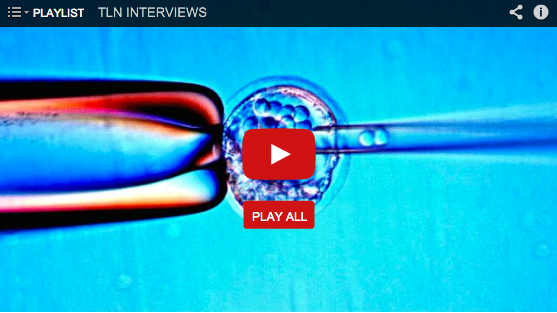
Stem Cell Bank Proposed by Japanese Researcher

On Wednesday, a Japanese researcher proposed a system that could help reduce the time and money needed for treating patients with regenerative medicine in the future. A new type of stem cell, which is produced from a donor’s ordinary skin cells, would be banked much like umbilical cord blood is today.

Shinya Yamanaka of Kyoto University said that instead of tailor-made treatments for individual patients, the proposed system would be more practical.

In November of 2007, without using human embryos or cloning technology, Yamanaka led one of two teams which were able to transform ordinary human skin cells into cells that look and act like embryonic stem cells.

Ethical debates have swarmed stem cell research for years, but Yamanaka’s Japanese based team, along with another team from the United States quited many by reporting their research last year.

Even though researchers say it will take years before such medicine can be used to treat people, new hopes for regenerative medicine have been kindled by the new type of cell called the induced pluripotent stem cell (iPS cell).

“It may be a good idea to make an iPS cell bank,” Yamanaka told a news conference.

“By making such a bank, we can cut down the cost of treatment and also we can shorten the period which is required for the generation of iPS cells,” he said.

“In reality, tailor-made medicine using iPS cells is not so ideal.”

The way to treating people with injuries as well as diseases like diabetes, Alzheimer’s, and heart disease may be paved with iPS cells. Scientists expect them to improve disease research considerably.

However, cells may be needed within 10 days to treat a spinal cord injury and Yamanaka said it takes about three months to transform a patient’s skin cells into iPS cells. The lag in time is the reason for the banking proposal.

Before iPS cells can be used to treat humans, more testing is needed. Although he expects iPS cells to be clinically useful within ten years, it could be longer before iPS cells are used to treat some of the more challenging diseases said Yamanaka.

Mainstream Adult Stem Cell Treatment Access Less than a Decade Away

On Wednesday, a Japanese scientist who recently broke new ground in the field of stem cells said that the technology could be used to cure diseases and heal injuries within 10 years.

Shinya Yamanaka of Kyoto University said the new technology is so simple that many laboratories are competing to make further breakthroughs. In November, Yamanaka’s team reported the creation of cell that were indistinguishable from those taken from human embryos. They accomplished this feat by reprogramming human skin cells.

It is only a matter of time before this technology is used in hospitals said Yamanaka while meeting with reporters in Tokyo.

“I can tell for some patients and for some diseases it may be not, like, 10 years, but for some diseases I can imagine it can take longer than 10 years,” Yamanaka said.

“That depends on diseases and injuries. There’s no single answer,” he said.

There are 220 different types of cells in the human body, and stem cells which are primitive cells, have the potential to differentiate into any of these.

With the hope that stem cells can replace diseased or damaged cells, tissues, and organs, the therapeutic potential of stem cells is enormous.

Since viable embryos had to be destroyed to extract embryonic stem cells (cells which are thought to have the greatest potential among all stem cells), stem cell research was highly controversial: until now.

Critics of embryonic stem cell research, which include the Roman Catholic Church, praised the discovery. A separate team of U.S. researchers at the University of Wisconsin at Madison, led by James Thompson, also reprogrammed skin cells at the same time as the Japanese team.

The research has since upped the pace. Several laboratories in Japan as well as up to five in the United States have also converted human skin cells into pluripotent stem cells, or iPS cells.

“This is because technology is very simple,” he said. “All you need is a basic technology, cell biology” and “you don’t need special technology or equipments.”

Yamanaka admitted that the many rivals in research make things stressful. But he believes “it speeds up everything, the process, because of the competition.”

“So I think it’s very good for patients who are waiting” for treatment, he said.

Umbilical Cord Blood Bill Proposed by MP

In order to get doctors to offer parents the option of storing their baby’s umbilical cord blood, an MP is set to launch a political bid.

A bill regarding the potentially life-saving technique will be presented to Parliament by Tory MP David Burrowes.

Umbilical cord blood is rich in stem cells. Many diseases can currently be treated using these cells, and with technological advances, many more will be treated in the future.

Since NHS provision is limited to only a handful of trusts, a host of private firms have begun offering the service.

Used to treat anyone who needs stem cells for a blood cell disorder, 2000 samples are taken by the NHS each year to supply the NHS Cord Blood Bank.

But matches have been difficult to find at times. Among those cases, patients in ethnic minority groups are most likely to not find a match.

Cord blood storage is often advertised as an insurance policy by private banks since the cells can be used in the future to treat illness. However the prices for private storage are as high as

Success Builds for Adult Stem Cell Treatments

In an attempt to save 2-year-old Caden Ledbetter, who is suffering from a rare cancer called neuroblastoma which attacks the nervous system, doctors at Medical City Dallas Hospital are using stem cells taken from umbilical cord blood for treatment.

The cancer damaged the cells in his bone marrow, bones, and liver. Doctors are hoping that the stem cells extracted from cord blood, which is Camden’s own and was saved and banked upon his birth, will replace the damaged cells.

Transplant doctors are increasingly using umbilical cord blood as a source of stem cells according to research from the American Academy of Pediatrics. The cord blood derived cells , which are a type of adult stem cell, are ethical — unlike embryonic stem cell extraction, where an embryo must be destroyed in the process. Additionally, embryonic stem cells have never successfully treated a human, even in trials.

Caden is one of thousands of patients being treated with adult stem cells. Recent years have seen remarkable advances in adult stem cell treatment and research.

Tremendous Progress with Adult Stem Cells in 2007

The FDA approved clinical trials for adult stem cells to the tune of 1100 in 2006. But 2007 was even more successful for adult stem cells. Over 1400 FDA approved trials for 73 different conditions in humans where patient health has been improved through adult stem cell therapy were documented in peer-reviewed studies in 2007.

Umbilical cord blood, placentas, and other tissues in the body contain adult stem cells. They are found throughout the entire body. No embryos are destroyed when extracting adult stem cells, which is in contrast with the extraction of embryonic stem cells.

We have decided to publish a yearly update each fall/winter since treatments with adult stem cells are continually increasing and continue to be impressive. (Note: Embryonic stem cells have never produced successful treatment trials in humans.)

Adult stem cells do not create tumors, unlike embryonic stem cells.

The research and treatments involving adult stem cells has been fast paced since our 2006 paper, thus, we have summarized some of the developments in the field below.

The Regeneration of Heart Tissue

Eight years ago, Doug Rice was diagnosed with congestive heart failure. Due to his diabetes, he was unable to get a heart transplant.

Rice decided to travel offshore for adult stem cell treatment since he was facing fatal heart failure. Stem cells were extracted from a sample of blood taken from Rice. The cells were differentiated into angiogenic cell precursors, then transplanted into Rice’s heart.

The results were immediate for Rice, who experienced an increase in his hearts efficiency of 30 percent. He originally had an ejection fraction of 11 percent.

According to Rice, “I’ve been around a lot of people with bad hearts. I know if they looked at [adult stem cell therapy], it might save their lives. I firmly believe it saved mine.”

A few other companies have developed adult stem cell technology for heart patients.

Marc Penn, director of the Bakken Heart Brain Institute at the Cleveland Clinic, says of one new therapy, “It’s very exciting, perhaps a sea-changing trial for the field … offering the chance of an off-the-shelf-product.”

Bone marrow stem cells have been used by Bodo-Eckehard Strauer to treat over 300 heart patients. He is the director of the cardiology department at Dusseldorf University Hospital. A patient who was

Stem Cells from Hair Roots Give Rise to New Skin

Approval to produce artificial skin from a patients’ own stem cells has been granted to uroderm GmbH and the Fraunhofer Institute for Cell Therapy and Immunology IZI in Leipzig. This brings new hope to patients who suffer from chronic wounds.

From plucking a few hairs to a growing a piece of human skin in four to six weeks, the process sounds like something out of a science fiction movie. The actual process which is performed in the new cleanrooms at the Fraunhofer Institute for Cell Therapy and Immunology IZI in Leipzig is not as simple as a Hollywood film.

Doctor Developing “Supercell” for Heart Treatment

Terry Yau is a kind and thoughtful man. Despite being friendly and soft-spoken, many people avoid him if they can, and in some cases fear him. Yau is a heart surgeon, and his days often involve him giving an explanation to a patient: informing them that there is nothing else doctors can do. 99 percent of potential transplant recipients don’t receive an organ due to the lack of donors. Complications eliminate other patients from surgery consideration.

“It’s a miserable life,” Dr. Yau said. “Instead of living, they’re just waiting to die. That’s the thing that I hate the most.”

So Dr. Yau is finding new ways to help.

He is working on creating

MS Patient Improves Following Adult Stem Cell Treatment

Without the ability to even walk a short distance, Cathy Zuker suffered from Multiple Sclerosis for 27 years. Her condition had progressed to an absolute worse case scenario.

Before she got a stem cell transplant, she had to lift her legs manually when she got into the car. Her left leg would drag behind her when she walked. Her condition started improving after a stem cell transplant on May 21st, 2007. She began to notice a difference in her legs on the 24th. She said her legs started to feel lighter on the 25th, and considered her improvement to be amazing. On June 7th, 2007, she was able to not only move her legs but could get into a car without any help. Not only that, but her energy returned as well.

According to her,

Non-Profit Public Stem Cell Bank Opens in Chennai

Providing high quality stem cells for treatment, a Public Stem Cell Bank will be established in Chennai by the non-profit Jeevan Blood Bank company.

On Thursday, Dr. P. Srinivasan, Chairman, told reporters that about 40,000 units of stem cells collected from cord blood would be collected, processed and stored by the stem cell bank in five years. The project is set to go live before the end of March 2008.

Blood cancers, heart disease, autism, and more than 70 other medical conditions can be treated and potentially cured by stem cells. It is one of the best treatment options available today.

Srinivasan said the bank plans to collect cord blood from donors, harvest stem cells, test for transmissible infections, store and ultimately release the safe compatible units to any one who needs them across the world.

By December of 2008, completion if accreditation processes by international agencies is planned for the Jeevan Stem Cell Bank.

Private storage at the bank will be fee based. The funding would then be applied to the public side of the bank in order to pay for those services. 30 percent of the available storage has been reserved for private banking, while the other 70 percent is reserved for public storage.

So that matching units of cord blood can be identified by any hospitals across India as well as the world, the bank plans to publish the contents of a stem cell registry online in the next 12 weeks. When a suitable unit of stem cell was available, it would be transported frozen to the hospital where the patient was admitted for transplantation, he said.

By April 2009, the facility will be moved to a permanent 25,000 square feet location. In the meantime, it will operate on rental premises said Srinivasan.