Media Cover-Up, Public Left in the Dark About Adult Stem Cell Superiority

It is almost definite that a presidential veto will obstruct the democratic controlled house and their recent effort to drive embryonic stem-cell research forward by expanding federal funding. The decision to boost funding won by a 253-174 vote, but fell under the 290 required to take precedence over any potential, and in this case expected, executive branch intervention.

Proponents of the bill say a veto would obstruct scientific efforts that could guide the way to prospective breakthroughs for the treatment of many diseases. But contrary to what many have been led to believe, that is not the case.

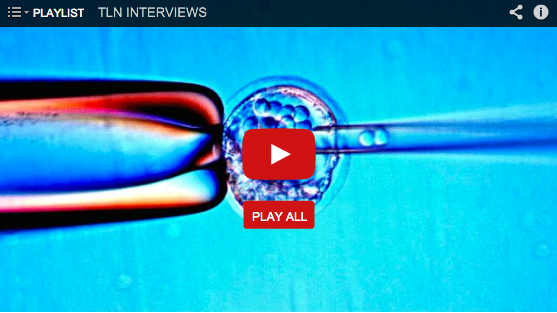
Adult stem cells, an ethical alternative to those that are derived from embryos, have proven themselves to be more effective thus far and have accomplished astonishing breakthroughs far beyond anything managed by their embryonic counterparts.

Almost 1,300 clinical trials are presently underway involving adult stem cells, and they are responsible for the treatment and cures for more than 70 diseases. A wider assortment of mature stem cells can be created using adult stem cells as science persistently proves. The January issue of Nature Biotechnology highlighted perhaps the most promising of these results.

Stem cells derived from the amniotic fluid that fills sacs surrounding the fetus emerged as an equal rival to embryonic stem cells. While preserving the imperative advantage of verified success over embryonic stem cells, they are also equivalent in terms of versatility compared to embryo derived cells. The discovery was reported by Anthony who is the director of the Institute for Regenerative Medicine at Wake Forest University School of Medicine.

Since there are no realistic applications for embryonic stem cells at the moment, those on the hunt for more embryonic stem cell funding from taxpayer dollars have felt distraught with the discovery. At least 10 years stand in the way of approved embryonic stem cell treatments according to researchers, and not even one single clinical trial has been performed using embryo derived cells thus far.

An advantage once held by embryonic cells was their capacity to replicate. Outside the body, adult stem cells cannot be multiplied for extended periods of time, where embryonic cells can expand indefinitely. However, with the ability to double every 36 hours, amniotic stem cells grow just as rapidly as embryonic cells. Without any indication of slowing, they have now been expanding the same amniotic stem cell line for two years at Wake Forest University.

Perhaps, one advantage still holds true for embryonic stem cells, and that is their potential to possibly develop into all 220 varieties of human cells. They can differentiate into all three subtypes of cells, or

Brain Damaged Teen Returns After Stem Cell Treatment in China

Swinging his legs in an airport chair while waiting, five-year old Brendan is becoming impatient.

His sister Tori and both of his parents have been gone for over a month and he is excited to see them.

With the hope that it would bring back the girl everyone used to know, Tori was accompanied by her parents on a journey to China to undergo stem cell therapy.

Brendan tackled his family with hugs and kisses as soon as he saw them walk off the jet ramp.

“It’s been a long trip,” said Tim, Tori’s father, tearing up. “But hopefully we’ll see some improvements.”

Now they are glad to reunite with family and friends even though they may be worn out from the 44 hours of traveling.

In an effort to reduce some of the effects of Tori’s brain damage, her treatment on the 20th floor of the Chinese clinic was composed of electronic muscle treatment, acupuncture, aggressive physical therapy, and of course stem cells.

After being trapped in a submerged vehicle that flipped into a canal in a car accident, Tori was deprived of oxygen for more than 25 minutes. It was on that day, June 19th, 2005, that Tori and her entire family’s lives completely changed. Tori’s ability to eat, speak, and her mobility were all taken away that day due to the anoxic brain injury she suffered.

Improvements in eating, better control of her body, and more successful communication were results that the family hoped for more than a month ago when discussing the stem cell treatment and trip to China. And Tori’s circumstances have already begun to improve.

“Tori’s flexibility and joint range is greatly improved,” her father Tim said in an e-mail interview from China. “Whether that is purely a result of the physical therapy or a combination of physical therapy and the stem cells is really unknown.”

She has gained greater control of her arms, particularly her right one. And other improvements include her increased mobility and ability to eat food by mouth.

“She even held a cookie and brought it to her own mouth for a bite. She definitely could not do that prior to this trip,” Tim said, adding that his wife Maria believes Tori is also more responsive and quicker to react.

Before the journey to China, that is what Maria hoped she would see.

“I hope it helps,” she said in a Jan. 5 interview. “I don’t expect a miracle. Even just something little, like eating better or communicating more.”

In the two to six-month period following the stem-cell treatment, they are hoping for even more development. Most patients see the most results during that time explained Tim.

“We want to hear meaning from her voice, perhaps a definitive ‘Mom’ or ‘Dad,’ ‘yeah’ or ‘no’,” he said. Improved muscle control is also a hope he added.

Tim said they may try a second round of hyperbaric oxygen chamber treatment, and will continue the electronic muscle and acupuncture treatment, emphasizing that they wouldn’t just be waiting around for results to manifest themselves.

And if they see positive results from the first stem cell treatment, a second trip could appear on the agenda as well.

“Whether it is for the stem-cell treatment she received this time (adult stem cells taken from an umbilical cord) or for some other types that are becoming available now and that I am researching, I don’t know,” Tim said.

Maria was grateful that Tori at the very least had the opportunity to undergo the procedure.

“It was a privilege that she was able to go there and get this treatment,” she said. “There are so many people that can benefit from it. It was fortunate she was able to go.”

Female Enhancement, Adult Stem Cells Stay Abreast of the Situation

Yesterday, a ground-breaking stem cell treatment allowed women to create their own breast implants.

Encouraging stem cells to form breast tissue, scientists were able to initially harvest the cells from the women’s own fat.

Unlike the synthetic implants that are used by Hollywood stars, the outcome from the stem cells produce in a more natural appearance.

Women who have undergone the procedure say they have had no problems, and the Japanese research team responsible has carried out trials on dozens of women.

Plastic surgeons should be able to use the treatment within the next five years.

The method proved to be convincing for British surgeons. They called the procedure an “appealing” new technique.

The procedure involves extracting stem cells from fat, which can develop into many diverse tissues in the body.

The stem cells are combined with common fat cells and then injected back into the a patient’s breasts by Dr. Yoshimura and his team at the University of Tokyo.

The hope is the stem cells will lead to the development of new fat cells and persuade blood vessels to grow into new breast tissue and nourish it.

Without suffering any adverse side effects, 38 women have been treated with the technique since 2004 when it was first used.

Further tests are still considered necessary since the long-term efficacy has not been entirely demonstrated.

Current obstacles include the fact that slender patients may not have an adequate amount of fat to spare, but this could potentially be remedied in the future by using donor fat cells that have been tested for immune compatibility. But more pressing may be that compared to existing synthetic implants, the technique can increase breast size by only half as much.

However, the stem cell enhanced breasts avoid problems that plagued older silicone implants such as leaking. The effect is also more natural looking believes Dr. Yoshimura.

“Natural implants” can already be made using fat. But doctors say that since they lack a blood supply, they can shrink over time.

The stem cell enhancement would not be susceptible to this problem.

Dr. Yoshimura said: “I believe that within five years my procedure will be available as plastic surgery and that it will prove very popular.”

Proclaiming that stem cells can produce longer-lasting and shapelier implants as well as eliminate the need for extra surgery is Dr. Jeremy. He is a scientist at the University of Illinois.

In 2005, the U.S. doctor presented his work in Washington at that American Association for the Advancement of Science conference.

In order to generate varying sizes and shapes of implants, Dr. Jeremy changed stem cells into fat producing, or adipose cells in his tests.

These were cultivated in the laboratory and then injected beneath the skin of laboratory mice.

Upon observation, they were the same size and shape after being removed four weeks later.

An interest for patient use has risen among several British plastic surgeons.

Cord Blood Stem Cell Treatment for Woman with Spinal Aneurysm

Dawn has wanted to visit the second floor of her new home ever since she moved in. But it is something that she has to this day, been unable to do.

However, physically going to the second floor is now a few small steps closer to becoming a reality.

Seeking treatment for a spinal aneurysm she suffered when she was 20 years old, the now 28-year-old Dawn traveled to the costal city Shenzhen near Hong Kong. Her mother Phyllis accompanied her on the trip.

She used a wheelchair to get around but was able to recover some movement and ability in her limbs over the years. Then last year, she found another treatment that could help her make much greater progress: stem cell injections.

Instead of using controversial embryonic stem cells, the Chinese clinic uses cells harvested from umbilical cord blood. Autism, heart failure, Alzheimer

Toddler Fights Rare Leukemia Using Stem Cells

A bone marrow transplant was supposed to change the life of 2-year-old toddler Sorrel.

She is suffering with acute myeloid leukemia. In the UK, the condition only affects about 10 children each year, making it extraordinarily rare.

Using stem cells from an umbilical cord from Japan, her best prospect of defeating the illness is now a new type of stem cell therapy.

The alternative became plausible after she failed to respond well to chemotherapy treatment at Addenbrooke’s Hospital and no suitable bone marrow donor was found.

Since she was diagnosed last September, Sorrel’s parents Samantha and Robert have been keeping an unwavering vigil at her bedside.

Her ground-breaking surgery is scheduled for today, and she must be closely protected from now on. She will be highly vulnerable to infection says her father who is in Bristol with her.

Robert said: “Sorrel started nine days of pretransplant conditioning last Wednesday. This will basically wipe out her own immune system in readiness for the new stem cells to be transplanted into her. This puts her in a very vulnerable position – that’s why she will be in isolation for about six weeks. It could be very bad news if she catches certain bugs, viruses, fungal infections etc during this time, so we just have to hope she can deal with it.

Man’s Own Fat Stem Cells Transplanted into Heart

In an experimental treatment for angina and heart disease, doctors have implanted adult stem cells derived from a man’s fat tissue through liposuction into his heart.

Although he is doing well, it could take up to six months to see whether the cells repaired the damaged vessels in the 67-year-old man according to the Gregorio Maranon Hospital in Madrid.

He is the first patient to receive the treatment.

“Cardiologists … have implanted adult stem cells from fat in the heart of a patient for the first time in the world,” the state hospital said in a statement.

Scientists trust that therapy for a variety of conditions is feasible in the future since stem cells are master cells that can change in any variety of cell or tissue.

In conjunction with doctors at the Texas Heart Institute in Houston, the new treatment is being developed with cardiologists at the Spanish hospital. The study will involve 36 individuals and the first patient was treated on January 30. His name has not been made public.

Emerson, an American colleague of Spanish cardiologist Francisco extracted the stem cells together.

“In just five hours approximately the cells were extracted, purified, selected and implanted with the aim of regenerating new blood vessels which may allow them to flow blood properly to the heart of the patient”, the hospital said.

In only two hours, 28 million cells were set for implanting. The reason for this was that unlike other varieties of stem cells, those extracted from fat do not need to be cultured for three weeks.

The cells were implanted with the use of a catheter by plastic surgeons, the same doctors who were also responsible for originally extracting the fat tissue from the patient

Potential Cure for Diabetes Using Adult Stem Cells Found

Dr. Banting and Dr. Best discovered insulin in 1929, but according to several American diabeteologists and researchers, this could be the most significant step towards a cure for diabetes since that time.

Type-2 diabetes afflicts 92% of the total number of diabetics worldwide. And more than 80% of patients could be improved or even cured with this treatment.

A team of researchers in Argentina demonstrated that stem cells can effectively fight and potentially cure diabetes. The levels of

Improving Cartilage Healing with Adult Stem Cells

Recovery can be a painful and lengthy process for an individual who has injured an elbow or knee. These parts of the body are composed of the slow-healing tissue, cartilage. Tissue that is damaged or missing is often lost forever. However, this may no longer be the case. Stem cells could possibly facilitate the needed tissue replacements as researchers at the University of Guelph are hoping.

Improving cartilage healing after joint injuries with the assistance of stem cells is the hope for biomedical sciences professor Dean and doctoral candidate Thomas. Joint injuries are frequent and expensive in horses, so the duo has made the decision to begin their research with an equine focus. In regards to human joint injuries, encouraging results from their research could serve as a model for future human treatment.

Cord Blood Stem Cells Last Resort for Young Man with Rare Immune Disease

On March 3rd, Freddie will celebrate his 21st birthday.

But it may only be the beginning of his life if all goes as hoped.

His parents Shirley and Fred had a decision to make when Freddie was 18 months old. He could either take his chances outside, or live the rest of his life inside a bubble. This was because Freddie

An Adult Stem Cell Answer for Alzheimer’s?

Ground breaking research was presented at the Blenheim Wesley Center on adult stem cell transplants. Dr. Richard, an Auckland University professor gave his presentation to more than 200 people.

Giving hope to those afflicted with Alzheimer’s and other neurological conditions, the pioneering brain scientist delivered his message.

Serving as a repair system by replenishing destroyed or damaged cells in the body, stem cells can divide and differentiate into other cells.

Enabling brain cells destroyed by diseases such as Alzheimer’s, Parkinson’s, and Huntington’s, to be restored; a feasible number of adult stem cells were effectively transplanted for the first time by neuroscientists at the university. The test subjects were laboratory rats.

Dr. Richard says that this specific type of stem cell therapy is still at least another 10 to 15 years away for humans. But the 61-year-old Lily Medal winner said that a difference could be made within the next five to ten years thanks to new drugs developed from the research.

Adult stem cells are already used to successfully treat many other conditions.

Human brain tissue will be required so that the large research group can utilize the raw materials to study brain disease. " It is a cornerstone of the research that families bequeath the brains of loved ones to us so that research can continue," he said.

At one time scientists believed that new brain cells were not created in adulthood, however, a top U.S. scientific journal decided last week to publish Dr. Richard’s research demonstrating the opposite. He was elated to hear the news.

The entire audience was listening to every word of Dr. Richard’s enthusiastic presentation, "Brain Diseases and Stem Cells – Fact or Fantasy". His lecture was intended for regular individuals without a medical background as well as health professionals.

"There is a lot of interest currently in the potential future use of stem cells and gene therapies to treat many neurological conditions," he said.

"The recent demonstration of stem cells in the adult mammalian brain raises the exciting possibility that these cells may be able to generate neurons for cell replacement in neurodegenerative diseases such as Parkinson’s, Huntington’s, Alzheimer’s and epilepsy."

"Our research studies provide the first evidence of neurogenesis in the diseased human brain and are exciting findings indicating the regenerative potential of the diseased human brain."

"Our studies suggest the possibility that neural stem cells in the adult human brain may provide a means for the application of novel new treatment strategies involving cell replacement techniques in the treatment of patients with brain diseases."

"However there is still considerable research to do before these exciting findings can be applied to the treatment of patients with neurological diseases."