Japanese Goverment Allocates Funds for More Adult Stem Cell Research

Recent breakthroughs in stem cell research have produced embryonic stem cells from non-controversial adult skin cells. These same scientists are now being funded by a Japanese government agency which has decided to forge ahead with stem cell research.

Human embryos, aborted fetuses, and adult stem cells made up the only three options for stem cell research. But that is no longer the case.

After the scientists reported their amazing discovery of being able to create stem cells from human skin cells, a mere 2 weeks passed before the decision was made by the Japan Science and Technology Agency to release the funds.

Due to the fact that scientists will no longer need to create and destroy an embryo in order to extract stem cells, critics of stem cell research should tone down their protesting due to this discovery.

The cells can be used to treat many different parts of a person’s body depending on their injury or medical disease/condition. The fact that they can be converted into many different types of cell tissue after they are extracted makes the discovery particularly amazing.

The cells were converted to an embryo like state by injecting them with genes. Skin cells from the foreskin of a newborn and normal skin cells from a 36 year old woman’s face were utilized by the Japanese and U.S. research teams. Cartilage, fat, muscle, brain, and heart cells were among those that were created from the skin cells.

In order to determine if the newly programmed stem cells actually are what they appear to be more studies will be required say both research teams.

A shout has been echoing around the world due to the breakthrough.

“We’re on the way now,” said Dr. Michael Creer, director of laboratory medicine at St. Louis University and former director of the St. Louis Cord Blood Bank. “The opportunities are expanding enormously. What we think might work today could well change in the next few months … We still don’t fully understand or appreciate what is possible.”

Many people are jumping up and down with excitement with the possibility of finding treatments and cures for diseases or conditions that currently have limited treatment options. Experts say that the work is far from finished.

“People have to understand that we’re not ‘there’ yet,” said Dr. Steve Teitelbaum, a Washington University pathologist.

Significant treatments have already resulted from stem cell research. Certain eye conditions, cancer, and diabetes are among the conditions which are currently treatable using adult stem cells.

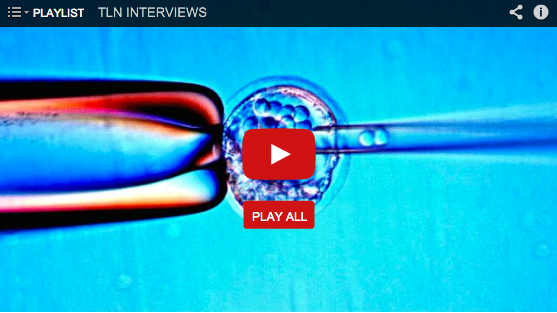
Dementia Reversed with Stem Cells

By restoring the decaying brain cells of a 65-year-old to the levels of an 18-year-old, Australian scientists believe they have cracked the code to preventing dementia.

Dementia is a group of degenerative brain disorders that includes Alzheimer’s disease. More than 200,000 Australians suffer from these conditions, but new hope may be on the way in the form of breakthroughs which were presented to pharmaceutical chiefs at a closed event last week.

Facilitating the boost of mental functions such as understanding and memory, the scientists have developed two ways to stimulate stem cells and regenerate the brain.

Increasing the number of stem cells in young and middle-aged brains could help stave off dementia according to leading stem cell scientist Dr. Rod Rietze and his team at the University of Queensland.

“The idea is not to transplant anything

New Blood Forming Stem Cells Create New Immune System for Mice

Researchers used new blood forming stem cells to replace the immune systems of mice.

Creating a new immune system for people with genetic or autoimmune blood diseases by transplanting adult stem cells is the eventual goal that researchers at the Stanford University School of Medicine have taken a small but significant step towards in their mouse studies.

Effectively replacing their immune systems, the scientists found a way to transplant new blood-forming stem cells into the bone marrow of mice.

Irving Weissman, MD, a co-senior author of the study and director of the Stanford Institute for Stem Cell Biology and Regenerative Medicine said that many aspects of the technique would need to be adapted prior to human testing.

Weissman suggested the remaining hurdles could eventually be overcome, which include the type of mice that was used which were a poor mimic of the human immune system.

The benefits have great potential when those barriers are overcome.

A person’s immune cells attacks their own body when they are afflicted with an autoimmune disease such as multiple sclerosis. Their defective immune system could potentially be replaced with an entirely new immune system that would not attack the body; an immune system transplant, live a heart or liver transplant, could be performed in order to accomplish this.

All the cells of the blood are generated by blood forming stem cells in the bone marrow. A new immune system can be created by transplanting new blood-forming cells into the bone marrow, but the defective cells must be eliminated first. Radiation or intensive chemotherapy is the typical method used to wipe out the existing system. However, increased risk of cancer, brain damage, infertility, and other tissue damage can be caused by chemotherapy while it eliminates the cells of the bone marrow. This makes the therapy inadequate, since the exchange of brain function in order to rid one’s self of multiple sclerosis is not a fair trade.

One potential path around the problem would be to eliminate only the blood-forming stem cells without affecting bone marrow cells or other tissues thought Weissman and co-first author Deepta Bhattacharya, PhD, a postdoctoral scholar in Weissman’s lab. The cells can be effectively destroyed by injecting mice with molecules that latch on to specific proteins on the surface of the blood-forming stem cells. This feat was accomplished by the team which included Agnieszka Czechowicz, first author and medical student. Without further harming the mice, the technique eliminated the blood-forming stem cells.

“It is essentially a surgical strike against the blood-forming stem cells,” said Weissman, the Virginia & D.K. Ludwig Professor for Clinical Investigation in Cancer Research.

A new blood and immune system was established after the transplanted new blood-forming stem cells took residence in the bone marrow.

The new immune system would no longer attack tissues of the body in the person with autoimmune disease. For example, eliminating the cause of the disease in people with a genetic disorder such as sickle cell anemia, the new blood system would not have the sickle-cell mutation. But the hurdles that stand in the way are tall.

First, the researchers don’t know whether the same molecule on human blood-forming stem cells would be the right one to target with a therapy. Additionally, a functioning immune system is missing in the mice involved in the study. Before tests can begin on humans, the technique must first be tested on mice with normal immune systems.

Weissman said he considered this work to be the beginning of research that could lead to human studies although the steps will take time to overcome.

The November 23rd issue of Science published the study.

Also contributing to the work was postdoctoral scholar, Daniel Kraft, MD.

The National Institutes of Health, the Cancer Research Institute, and the Stanford Medical Scholars Program provided fellowships to fund the research.

Stem Cells a Cure for Crohn’s Disease?

A cure for Crohn’s Disease could be found with the use of stem cells. Scientists are evaluating the efficacy of stem cell treatment on Crohn’s Disease when they are used to ‘re-boot’ the immune system.

The possibility of long-term remission for tens of thousands of people in the UK, and many more worldwide, is being investigated in a major clinical trial by University of Nottingham researchers. The experiments will involve taking stem cells from a patient’s own body and using them as a form of treatment.

The first of it’s kind to treat Crohn’s, the study is currently recruiting patients for its Europe-wide trial. Most commonly affecting the colon and small intestines, the condition is a chronic ongoing disease. The main symptoms are weight loss, fatigue, diarrhea, and pain in the abdomen. These are caused by inflammation, deep ulcers and scarring to the wall of the intestine.

About 3,000 to 6,000 new cases are diagnosed each year, and currently, about 60,000 people in the UK suffer from the condition. Immune suppressant drugs, and steroids which can only be administered in the short term are current treatments. There is no cure for the disease.

But a cure for up to 50 percent of sufferers could be in the making according to Professor Chris Hawkey and colleagues Dr. Paul Fortun and Dr. Tony Shonde who are together, conducting the Nottingham-led stem cell therapy.

Professor Hawkey said:

Americans Travel Overseas for Stem Cell Treatment

Since stem cell treatment cannot be administered in the United States due to federal restrictions, many U.S. citizens are traveling abroad to get this form of treatment.

Health officials call the procedures, which have been proven safe in many cases, risky and experimental. Despite the criticism, it seems the scientific evidence has trumped any attempt at diminishing the very real therapeutic potential of stem cells. Patients are traveling to countries in Central America and India and spending thousands of dollars to undergo stem cell treatment procedures.

Brian Sheridan, who is the supervisor for the Center for Spinal Cord Injury at the Rehabilitation Institute of Michigan in Detroit said that, “there are always risks.”

“You can end up with an adverse event. That’s the nature of some of these experimental procedures.”

With the hope of regaining her ability to walk, Jeni Rummelt is currently in Europe receiving her 6th stem cell treatment. The 32-year-old was paralyzed from the waist down following a car accident.

“(These abilities) would have never come back without the stem cells,” said Rummelt, who spent $25,000 on the first procedure and $7,000 for each subsequent therapy. “It’s a slow progress. You know it’s not going to happen overnight, but it’s worth it.”

Since the destruction of human embryos is required for embryonic stem cell research, many individuals say this type of research is unethical.

However, it is now possible to transform adult stem cells which are derived from the skin, into the equivalent of embryonic stem cells. This new discovery should quiet many critics, especially with further advancements of the technology already on the way.

“I can understand their motivation, their desperation but it’s not something I can recommend if the treatments have not been proven to be safe and effective,” said Mervin Yoder, an Indiana-based doctor who is president of the International Society for Hematology and Stem Cells.

Prevention of Age-Related Brain Loss with Stem Cells

In advanced aging, a cognitive decline is typically observed as the years go by. But scientists may have an answer for this dilemma as stem cell research has found a novel approach to slow and possibly prevent this phenomenon.

Giving rise to new nerve cells every single day, the adult brain contains highly “regenerative” stem cells. As the brain ages, the number of stem/progenitor cells and their progeny decline dramatically according to previous studies. The number of stem cells we have in old age could be preserved in by boosting the number of stem cells when we are young or middle aged according to Dr. Rietze and his team.

The number of stem cells typically found in the brain is increased by using two separate approaches. Stimulating resident stem cells to divide and increase in number, the first approach used by Dr. Rietze and his team involves performing an acute infusion of growth hormone directly into the brain. These results indicate that a new target for stem cell-related treatments may be growth hormone, which may also play an integral role in regulating brain stem cells.

Stem Cells 2.0: Beyond the Hype, Engineers Look to Build Fast

Engineers who figure out how to take the delicate results of lab experiments and make them robust enough to survive the onslaught of industry, have a long road to follow in order to get from breakthrough to application. Thus, the news last week that adult skin cells had been reprogrammed using a novel technique, to transform them into embryonic stem cells, was seen as only the beginning and not the end by biomedical engineer PeterZandstra and others like him.

Stem Cell Breakthrough Encourages Germany to Increase Funding

Germany’s research minister wants to ease restrictions on stem cell research after recent research revealed that common skin cells can be modified to have embryonic like power. The U.S. and Japanese research has also prompted a pledge to invest more money in adult stem cell research.

“We will double research funds for the technology for reprogramming adult cells from 5 to 10 million euros ($7 to 15 million) a year, so that work can proceed quickly,” Education and Research Minister Annette Schavan told the newsmagazine Focus.

“Germany should become the motor of adult stem-cell research,” she added, noting that the recent scientific developments are a means of ending the embryonic stem cell debate.

The two teams, one from Kyoto University in Kyoto, Japan, and another from the University of Wisconsin, both worked independently in what could be described as a “race” to be the first to reprogram skin cells. Both announcements were made on November 20th.

Since embryos are discarded in the process, embryonic stem cell research has come under harsh scrutiny. Their versatility has prompted support of equal force as well. The two sides may soon have little to debate about.

The ethical controversy surrounding the research would be eliminated with the use of reprogrammed skin cells.

Stem cell research is strictly regulated in Germany. Not scientific research with embryos can be conducted, unless the embryos were imported into the country prior to January 1st, 2002. A one time change to extend the cut-off date was proposed, however, that may no longer be necessary.

“What’s important is that there is now greater hope of being able one day to do without tests on embryonic stem cells,” she said.

More countries should benefit form the finding other than Germany. Regulatory bodies around the world have unanimously supported the research, which will take the cap off funding in some cases, and allow scientists to access cells that have embryonic power.

Stem Cell Storage Popularity at All Time High in Asia

Some 25,000 Malaysians have registered to have their stem cells stored 5 years after it was introduced to the country.

Stem Cell Breakthrough Catalyst to New Medical Era

The ecstatic reaction of researchers, who are normally a less animated bunch, may be a good indicator of the importance and impact of a recent independently verified discovery: that common skin cells may be used instead of embryonic stem cells for research.

“This is a tremendous scientific milestone, the biological equivalent to the Wright Brothers first airplane,” said Robert Lanza, chief scientific officer of Advanced Cell Technology in Massachusetts., a statement echoing the view of many of his colleagues.

Federal funding has been restricted amidst political and social controversy over embryonic stem cell research and the ethical implications that the science entails. Today, the issue is more mainstream than it has ever been, so a solid understanding of biology is not necessary to understand the enthusiasm surrounding the research. Without the use of a woman’s eggs or human embryos, embryonic stem cells have been created by converting normal human skin cells using a simple technique developed by researchers in Wisconsin and Japan.

A limitless supple of research material will more than likely be created, and ethical issues will be completely eliminated, as the experiments are repeated and the methods perfected in giving embryonic power to skin cells.

Embryonic stem cells are considered to have the potential to develop into every type of human cell. Developing treatments for a long list of diseases and injuries which affect virtually every organ is the focus of scientists using embryonic stem cells for research. But ethical concerns, and more importantly, scientific/technical roadblocks have plagued the science, which has yet to produce even one successful treatment.

Stem cell research as a whole should be accelerated thanks to the new discovery. Many researchers who once had their hands tied because of limited cell lines, limited funding, and ethical concerns, will have now have an entire new frontier open in front of them. A much broader scope of expertise will be brought to the laboratory, which will lead to a much wider array of funding.

The discovery could be the catalyst for a new era in medicine, and Mr. Lanza’s Wright Brothers analogy may be spot on. It took 42 years for humans to walk on the moon after Lindbergh flew across the Atlantic Ocean 24 years after the Wright brothers’ maiden flight. But society should not be accustomed to this rate of innovation. Medicine and technology, with today’s global reach, could set a new precedent for the pace of discovery.